On September 10, 2026, Roland Toth (Methods Lab) and Jochen Knaus (Research Management) hosted the workshop Introduction to LaTeX and Overleaf at the Weizenbaum Institute. This hands-on session introduced participants to the fundamentals of LaTeX and the collaborative online platform Overleaf, equipping researchers with essential tools for precise, reproducible, and professional scientific writing.
In the first part, LaTeX’s origins were traced back to Donald E. Knuth’s 1978 creation of TeX, born from frustration with poor digital typesetting. Built on TeX, LaTeX separates content from formatting, letting authors focus on structure while the system handles layout – a principle still vital for academic writing, math-heavy documents, and long-form research. This part highlighted key advantages of LaTeX over traditional word processors like Microsoft Word or Google Docs:
- Plain text source files ensure version control, reproducibility, and compatibility with modern data science workflows.
- Automated PDF generation from source code allows seamless integration with tools like R Markdown, Quarto, Sweave, and PyLaTeX.
- Robust support for citations and bibliographies via BibTeX and reference management tools (e.g., Zotero, Mendeley).
- AI-friendly format: vast corpora of scientific literature in LaTeX are widely used to train generative AI models.
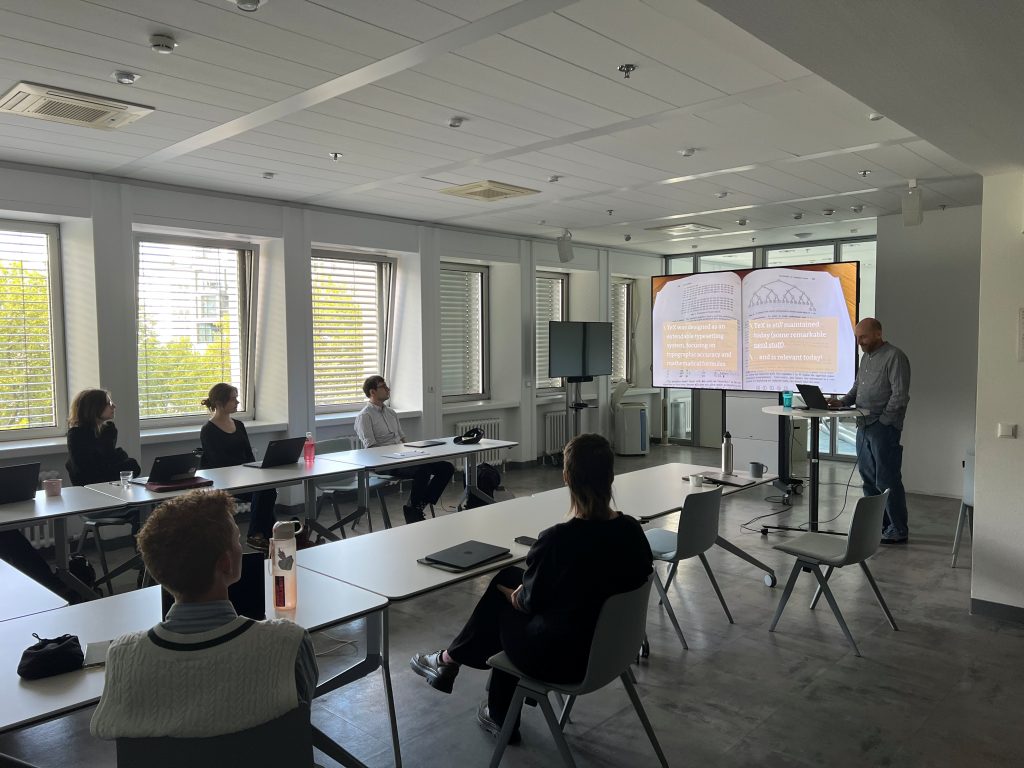
Participants were then introduced to Overleaf, the web-based LaTeX editor, which offers real-time collaboration, cloud storage, and a user-friendly interface – ideal for both beginners and experienced users. The Weizenbaum Institute’s own secure instance at https://overleaf.weizenbaum-institut.de was emphasized as a privacy-conscious alternative to the public version, which can also be used to collaborate with multiple people without requiring licenses. The core of the workshop was a hands-on exploration of LaTeX syntax and document structure. Throughout the session, participants were guided through practical exercises for each technique. Participants learned how to:
- Set up a new project, manage files, and use the Overleaf interface
- Structure documents and format text
- Create structured content using sections, subsections, and subsubsections
- Insert lists, tables, and figures with captions and labels
- Cite literature systematically using
.bibfiles - Troubleshooting common errors such as missing braces, undefined labels, and incorrect file paths.
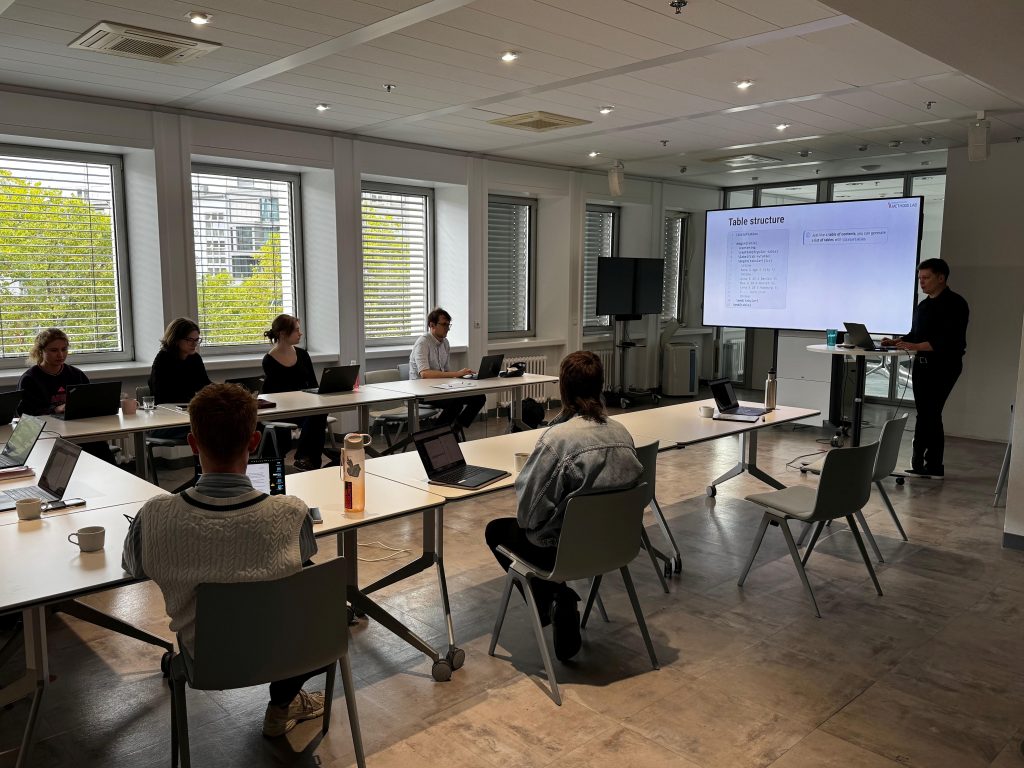
In the final segment, participants were given an opportunity to convert the format of a sample paper using a journal template, which is a typical task in scientific writing and publishing.
Participants left with a working knowledge of LaTeX and Overleaf, and the confidence to begin writing their next paper, thesis, or proposal in a format ensuring precision, consistency, and long-term sustainability.