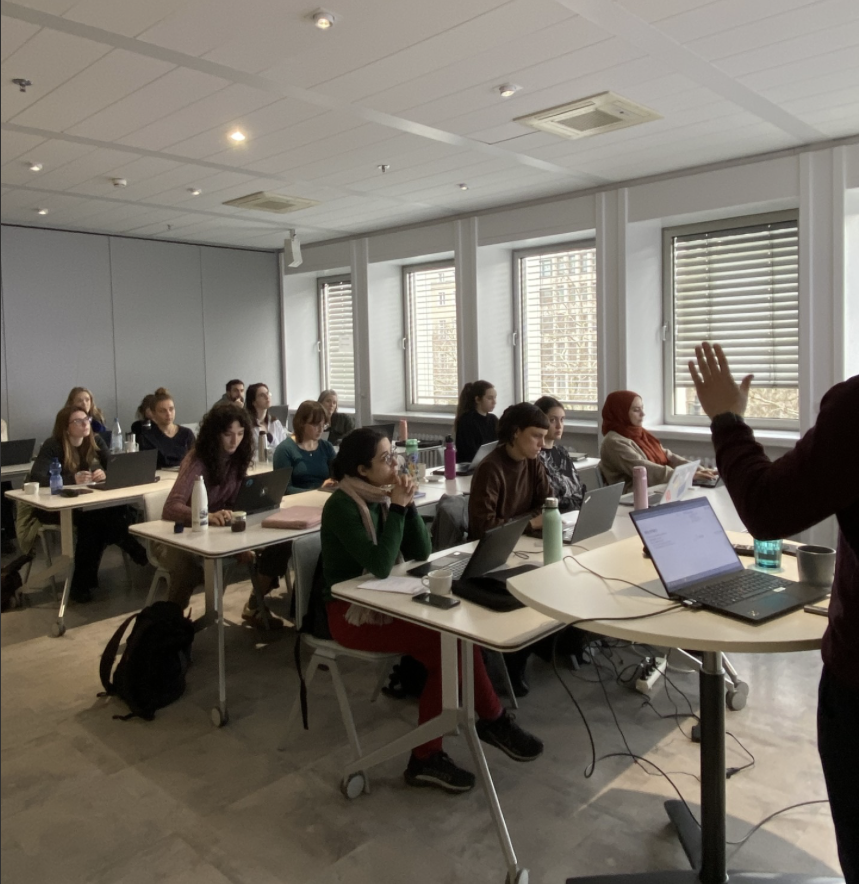
Workshop Recap: Reflections on Qualitative Interviews in Practice

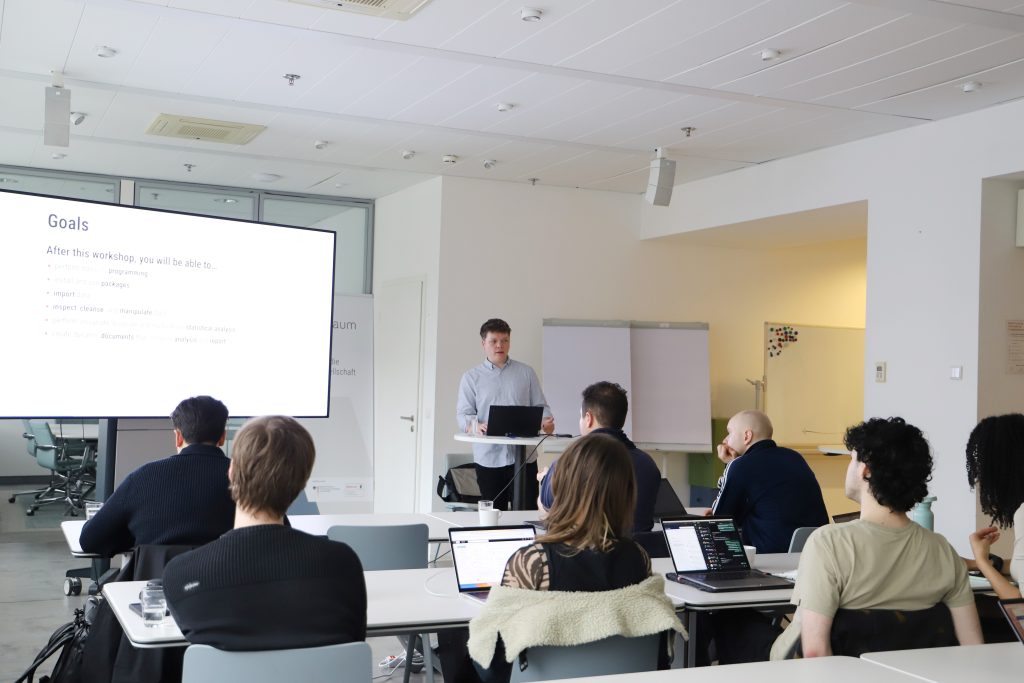
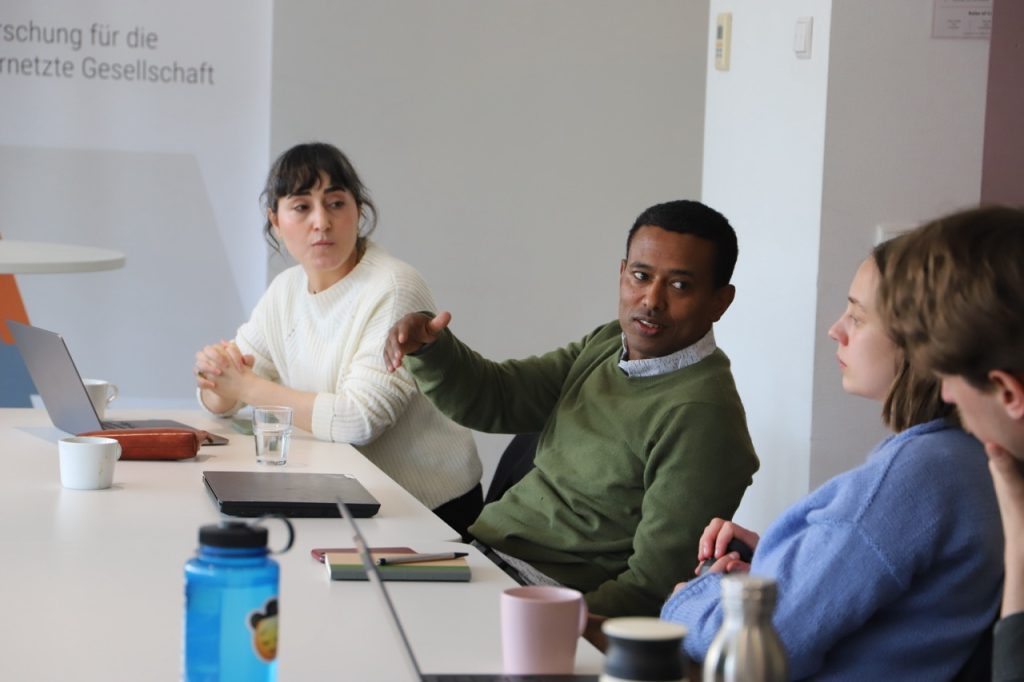
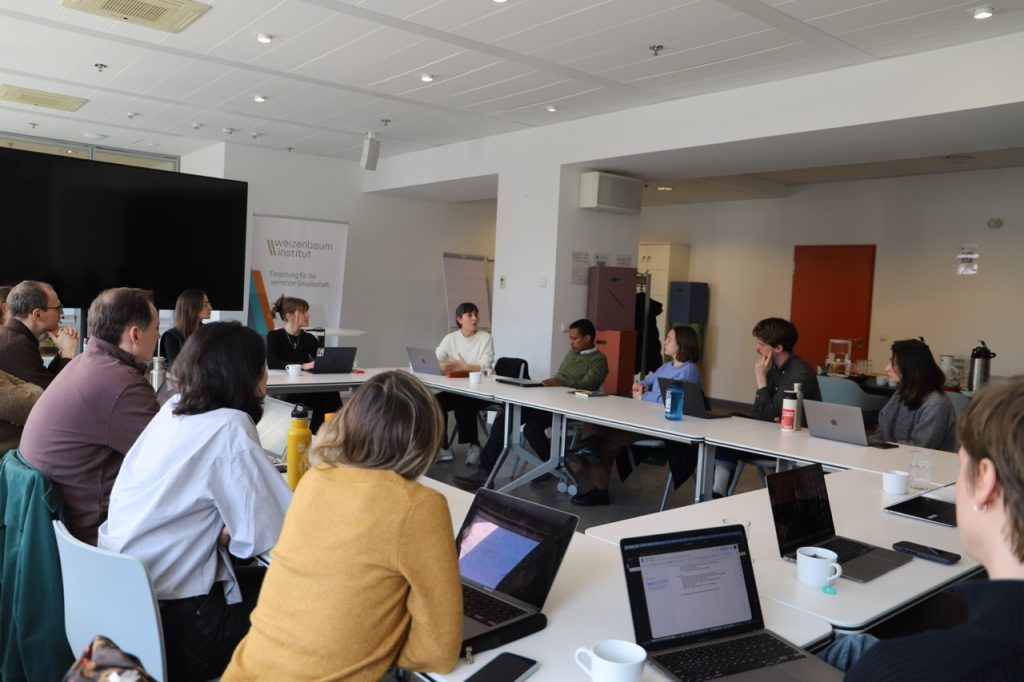
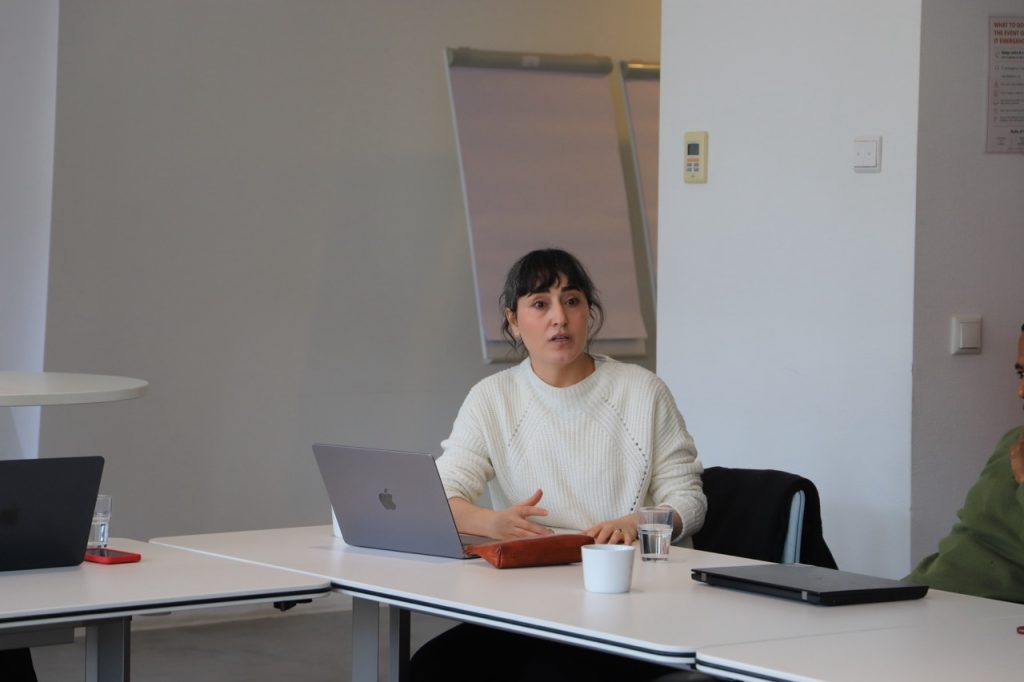
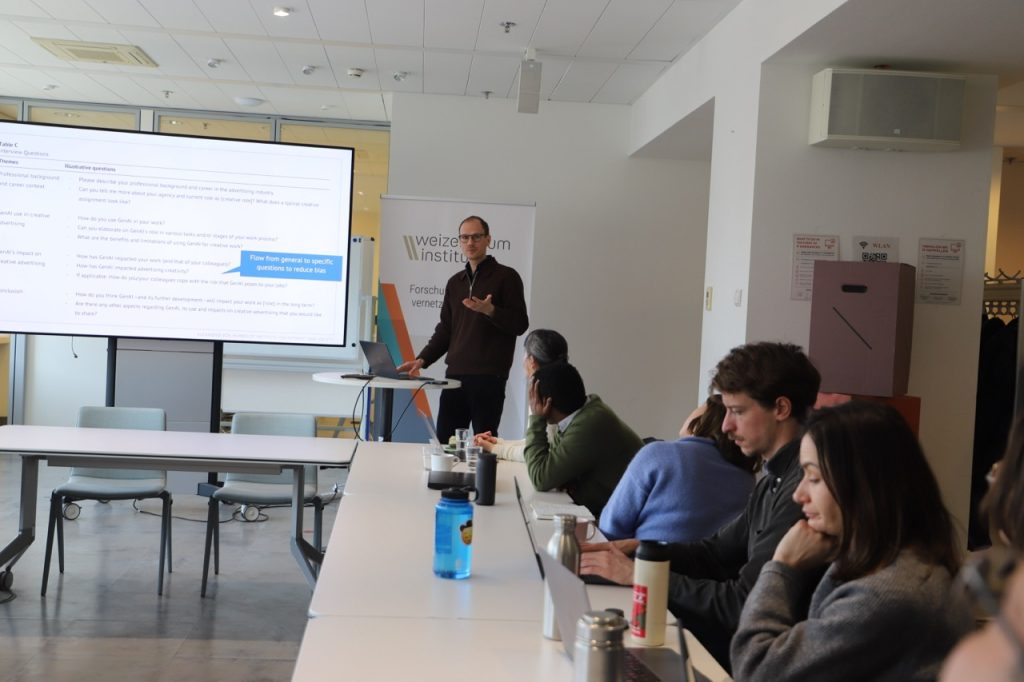
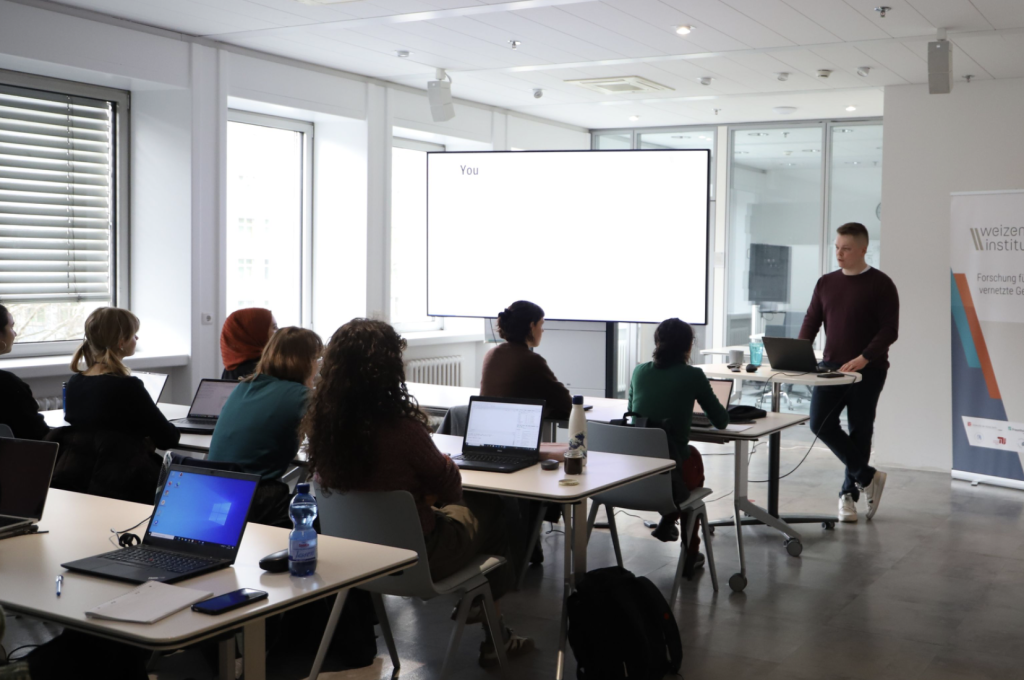
On March 19th, PhD researchers and postdocs from the WI, together with colleagues from partner institutions including DeZIM, FU Berlin, and WBZ, participated in a hands-on workshop on qualitative interviews as a method of data collection. With participants at different stages of their academic careers, the workshop offered a lively and collaborative space to reflect on both the practical challenges and methodological nuances of interview-based research.

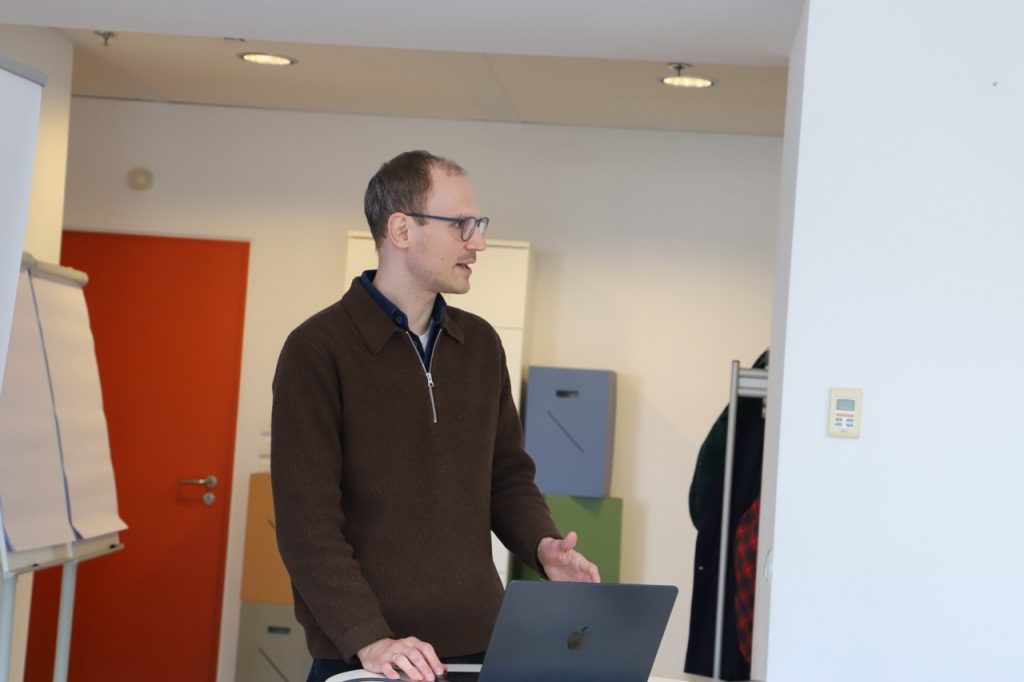
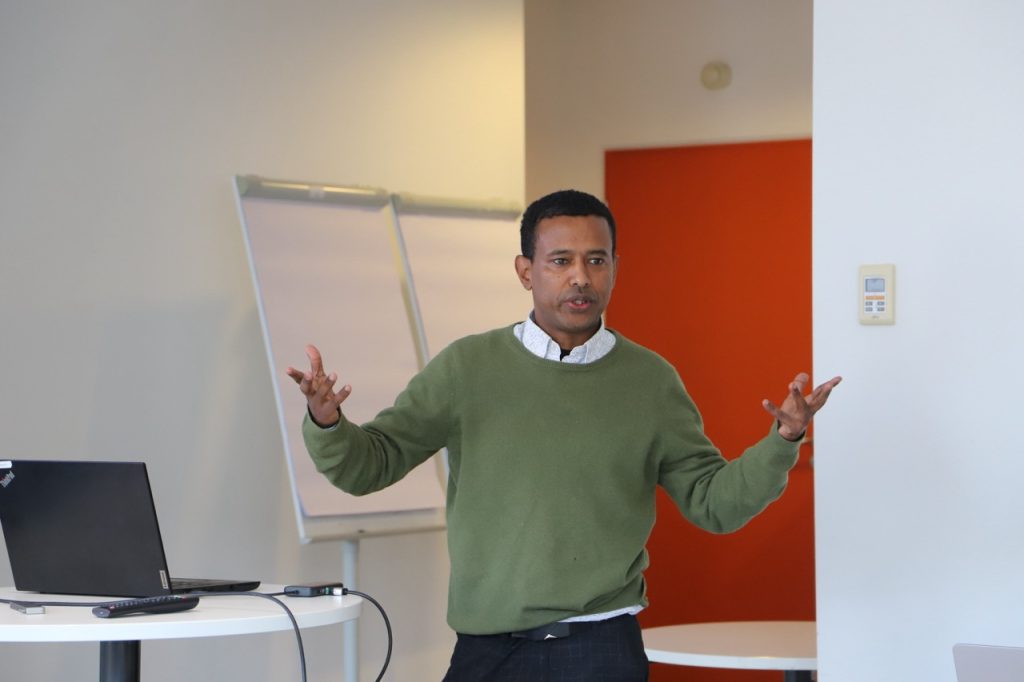
The session began with short inputs from Zozan Baran (FU Berlin), Samuel Zewdie Hagos (DeZIM), and Georg von Richthofen (HIIG). Drawing on their own research experiences, they shared insights into what makes qualitative interviews both rewarding and demanding. Meaningful interviews are not only about asking the “right” questions, but also about building trust, remaining reflexive, and approaching the research process with care and attentiveness.

A recurring theme throughout the workshop was positionality: how researchers are perceived, how they position themselves, and how this shapes the interview situation. While shared language or similar backgrounds can help establish rapport, the speakers emphasized that these factors do not erase existing asymmetries. Instead, they highlighted the importance of continuously reflecting on expectations, power dynamics, and vulnerabilities on all sides of the interaction.

This kind of reflection, participants noted, starts well before entering the field. Engaging deeply with theory and existing literature was framed as essential preparation – captured in the idea of approaching interviews with “an open mind, but not an empty head.”

Beyond interview design, the workshop also explored the broader conditions under which interviews take place. Discussions addressed practical considerations such as the choice of setting (online vs. in person) and how each shapes the interaction. Ethical questions also played a central role, particularly when working with sensitive or potentially traumatic topics.

In the moderated discussion that followed, participants connected these themes to their own research projects. Conversations around locality, navigating difficult situations, and managing the emotional demands of working with vulnerable groups led to a rich exchange of perspectives and strategies.

Rather than offering a fixed set of rules, the workshop highlighted the iterative nature of qualitative interviewing: analyze, adapt, and refine. 

Workshop: Qualitative Interviews in Practice (March 19, 2026)

Join us for the workshop Qualitative Interviews in Practice, organized by the Methods Lab at the Weizenbaum Institute. On March 19, 2026, three experienced researchers will share insights from their hands-on work with qualitative interviews.

The workshop focuses on practical experience, reflection, and methodological exchange. Each invited expert will give a short input based on their own research practice, addressing topics such as planning and preparing interviews, conducting interviews in different contexts, training interviewers, handling challenging situations, and reflecting on lessons learned. The inputs will be followed by an open discussion, where participants can bring their own projects, questions, and experiences.

The workshop is open to researchers at different stages of their careers—from those preparing their first interviews to those with extensive field experience who are interested in exchanging perspectives and best practices.

To learn more, please visit our program page. We hope to see you there!

Workshop: Introduction to Programming and Data Analysis with R (March 25-26, 2026)

The Methods Lab is happy to welcome back the fourth annual Programming and Data Analysis with R workshop, led by Roland Toth (WI). The two-day workshop will take place at the Weizenbaum Institute on Wednesday, March 25, and Thursday, March 26.

Aimed at participants with beginner to intermediate experience, the workshop offers a practical introduction to programming in R. On the first day, participants will learn the basics of coding, key data wrangling techniques, and how to work with Markdown. The second day builds on this foundation by focusing on data analysis through hands-on work with real datasets, allowing participants to explore a research topic with guided support.

Across both days, the workshop combines clear explanations with practical coding exercises, creating an interactive and supportive learning environment for developing core data analysis skills.

Seats are limited to 20 participants. For more information, check out the program page!

New Publication: Extracting smartphone use from Android event log data

Back in October 2024, the Methods lab shared a preprint of a study by Methods Lab member and data scientist, Roland Toth, and former research fellow, Douglas Parry, exploring how to isolate meaningful measures of smartphone use from Android event log data. We’re now pleased to announce that this work has been peer-reviewed and published in the journal Computational Communication Research.

The article titled “Extracting Meaningful Measures of Smartphone Usage from Android Event Log Data: A Methodological Primer” outlines a practical and reproducible step-by-step guide for deriving objective indicators of human usage from raw mobile data, offering valuable insights for research in social science and related disciplines. It details the extraction of key usage metrics through written explanations, visual aids, and pseudo-code. The paper is a vital resource for researchers seeking to understand patterns of mobile phone engagement and its implications in today’s rapidly evolving digital environment.

Workshop Recap: Introduction to Programming and Data Analysis with R

A third edition on the Introduction to Programming and Data Analysis with R workshop took place on March 12th and 13th, 2025. Roland Toth with the Methods Lab at the Weizenbaum Institute engaged almost 20 participants with essential methods of data analysis via comprehensive coverage of fundamental R programming concepts and techniques.

On the first day, Roland guided participants through the basics of R syntax and its integration with Markdown/Quarto in an interactive environment. This included the very basics of programming like functions, objects, and indexing, but also data-related practices like data wrangling, sanity checks, and simple statistical analyses. Among others, participants also gained insight on managing warnings and errors that might stunt the process of coding throughout projects.

On day two, after an introduction to data visualization techniques, participants put their learning into practice: They explored provided survey data and developed a research question, so they could prepare and statistically analyze the data accordingly in R. The result was a reproducible HTML report on the reasoning behind the research question, all data wrangling steps, an exploration of the data set, the analysis, and the results including an interpretation. Attendees also supported each other’s progress whenever possible, while Roland offered personalized guidance.

The workshop concluded with a thorough review of useful functions and packages in R. Throughout the event, participants were encouraged to ask questions freely and frequently, and they took the opportunity. The Methods Lab would like to give a great thanks to all guests for their attendance and lively participation!

Workshop: Open Research – Principles, Practices, and Implementation (September 3, 2024)

We’re excited to announce our upcoming workshop Open Research – Principles, Practices, and Implementation, which will take place on Tuesday, September 3. This workshop will be conducted both at the Weizenbaum Institute and online, and is open to Weizenbaum Institute members as well as external participants (and the QPD).

Led by Tobias Dienlin, Assistant Professor of Interactive Communication at the University of Vienna, this workshop will equip participants with skills in open research by covering principles of transparency, reproducibility, the replication crisis, and practical sessions on sharing research materials, data, and analyses. It will also include preregistrations, registered reports, preprints, postprints, TOP Guidelines, and initiatives like DORA, CORA, and RESQUE. Participants will engage in drafting preregistration plans and discussing the incentives and challenges of open research, aiming to integrate these practices into their work for a more transparent and robust research community.

For further details, visit our program page. We are looking forward to your participation!

Short Project: Ethics of Data Work

AI systems rely heavily on workers who face precarious conditions. Data work, clickwork, and crowdwork—essential for validating algorithms and creating datasets to train and refine AI systems—are frequently outsourced by commercial entities and academic institutions. Despite the vast and growing workforce of 435 million data workers enabling machine learning, their working conditions remain largely unaddressed, resulting in exploitative practices. Academic clients, in particular, lack clear guidance on how to outsource data work ethically and responsibly.

To address this issue, Christian Strippel from the Methods Lab is part of the short project “Ethics of Data Work” together with Milagros Miceli and Tianling Yang from the research group “Data, Algorithmic Systems and Ethics“, Bianca Herlo and Corinna Canali from the research “Design, Diversity and New Commons“, and Alexandra Keiner from the research group “Norm Setting and Decision Processes“. Together they aim to create equitable working systems grounded in the real knowledge and experience of data workers. The project will gather valuable insights about the challenges and needs data workers face, with the objective of developing ethical guidelines for researchers to ensure responsible and ethical treatment in the future.

Workshop Recap: Research Ethics – Principles and Practice in Digitalization Research

On April 18 2024, the Methods Lab organized the workshop Research Ethics – Principles and Practice in Digitalization Research to meet the increasing relevance and complexity of ethics in digitalization research.

In the first part of the workshop, Christine Normann (WZB) introduced participants to good research practice and research ethics in alignment with the guidelines of the German Research Foundation (DFG). Besides the need to balance the freedom of research and data protection, she informed about important institutions, noted the difficulties of formulating ethics statements for funding applications before study designs are finalized, and provided some practical tips regarding guidance when planning research.

Next, Julian Vuorimäki (WI) guided participants through the handling of research ethics at the Weizenbaum Institute. He focussed on the code of conduct, ombudspersons, guideline for handling research data, and the newly founded review board. The latter is in charge of providing ethics reviews for individual projects and studies, which can be applied for through a questionnaire on the institute website.

In the second part of the workshop, three researchers presented practical ethical implications and learnings from research projects. Methods Lab lead Christian Strippel reported on a study where user comments were annotated to allow for the automatic detection of hate speech. He focused on possible misuse for censorship, the confrontation of coders with questionable content, and the challenges of publishing the results and data regarding copyright and framing. Tianling Yang (WI) presented ethical considerations and challenges in qualitative research. The focus lied on consent acquisition, anonymity and confidentiality, power relations, reciprocity (i.e., incentives and support), and the protection of the researchers themselves due to the physical and emotional impact of qualitative field work. Finally, Maximilian Heimstädt (Helmut Schmidt University Hamburg) talked about ambiguous consent in ethnographic research. He gave insights into a study in cooperation with the state criminal police office to predict crime for regional police agencies. Not all individuals in this research could be informed about the research endeavor, especially when the researchers accompanied the police during their shifts, which raised the question of how to find a balance between overt and covert research.

The Methods Labs thanks all presenters and participants for this insightful workshop!

Workshop Recap: Introduction to Programming and Data Analysis with R

On April 10th and 11th, The Methods Lab organized the second edition of the workshop Introduction to Programming and Data Analysis with R. Led by Roland Toth from the Methods Lab, the workshop was designed to equip participants with fundamental R programming skills essential for data wrangling and analysis.

Across two days, attendees engaged in a comprehensive exploration of R fundamentals, covering topics such as RStudio, Markdown, data wrangling, and practical data analysis. Day one focused on laying the groundwork, covering the main concepts in programming including functions, classes, objects, and vectors. Participants were also familiarized with Markdown and Quarto, enabling them to include analysis results while producing text, and the key steps and techniques of data wrangling.

The first half of the second day was dedicated to showcasing and exploring basic data analysis and various visualization methods. Afterwards, participants had the opportunity to put into practice the knowledge they had gained from the previous day by working with a dataset to formulate and address their own research questions. Roland was on hand to offer assistance and guidance to the participants, addressing any challenges or concerns that arose along the journey.

The workshop fostered a collaborative learning environment, with lively discussions and ample questions from all. We thank all participants for their active involvement!