The Methods Lab is happy to announce the workshop Advanced Data Wrangling with R, led by Roland Toth (WI). The single-day workshop will take place at the Weizenbaum Institute on Wednesday, November 11.
Building on foundational knowledge, this workshop dives deep into the power of R for transforming raw, messy data into clean, structured information. Participants will explore the potential of the tidyverse ecosystem, learn efficient data manipulation with dplyr and the pipe operator, advanced string processing using regular expressions, and creating reusable functions to automate repetitive tasks. A key highlight is the integration of Quarto, which allows to generate fully reproducible reports directly from code. Whether you’re working with survey responses, longitudinal data, or complex text, this workshop equips you with the tools to streamline your data wrangling workflow and ensure reproducibility from start to finish.
Beginner to intermediate experience with R or another programming language, and a basic understanding of descriptive statistics, are required.
Seats are limited to 20 participants. For more details, visit the event page!
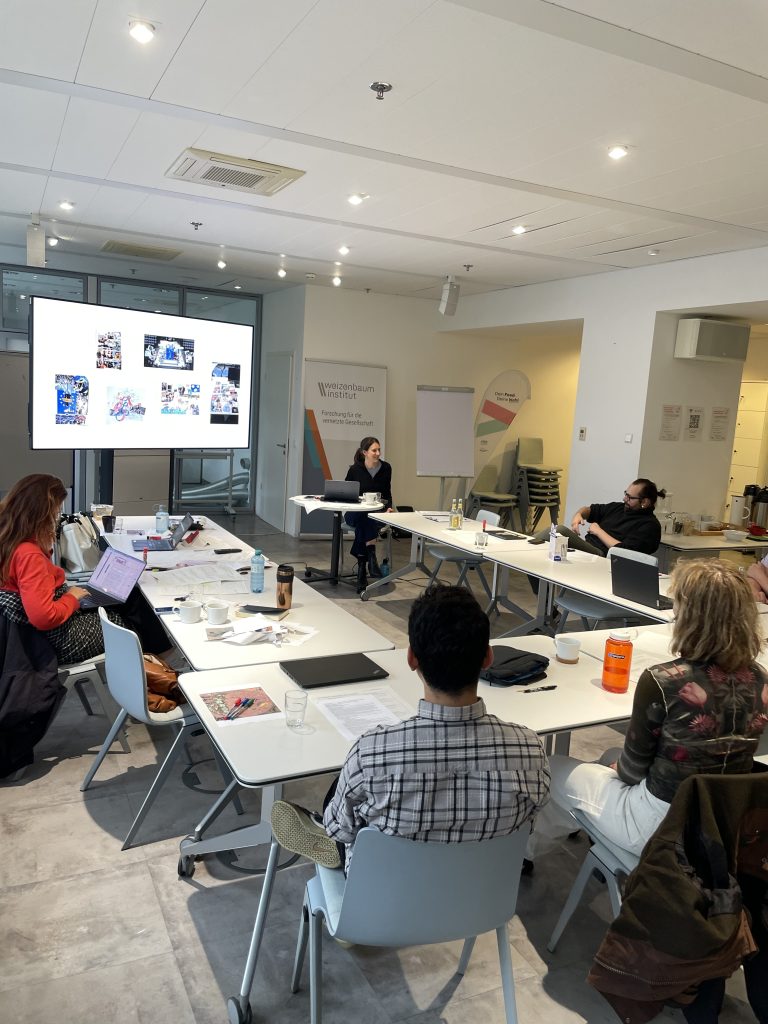
On October 8, 2026, Franziska Zirker (Weizenbaum Institute) hosted the workshop “Visualizing Situatedness – Situational Analysis through Maps and Collages” at the Weizenbaum Institute. This creative, hands-on session introduced participants to situational analysis as a qualitative research approach and explored how visual mapping and collage-making can help researchers reflect on the complexity of the situations they study.
In the first part, participants received a theoretical introduction to situational analysis, tracing its development from grounded theory through the interpretive turn to postmodernism. Situational analysis recognizes that researchers actively participate in the production of knowledge which is always partial. Rather than striving for formal truth, it focuses on differences and contradictions, centering on the relational ecology of a situation. Its aim is to produce sensitizing concepts that shape how we can think about a phenomenon while remaining open to revision. Whereas grounded theory relies mainly on coding and constructing categories, situational analysis places mapping at its core.
The approach offers three analytical strategies:
1) Situational maps lay out the relevant elements of a situation and the relationships between them.
2) Social worlds/arenas maps lay out collective actors and the issues that bring them into conflict or negotiation.
3) Positional maps lay out controversies and examine the positions taken and not taken.
Guided by the question about what is present in a situation and how these elements transform it, mapping serves two purposes: early on, it helps make prior knowledge and assumptions explicit and guide theoretical sampling; later, it opens up the analysis and avoids premature closure.
The core of the workshop was hands-on work with participants’ own research projects. Participants first created a messy map of their research situation and then transferred it into an ordered situational map template (Clarke, Situational Analysis, 2nd ed., 2018, adapted by Franziska Zirker), followed by a short written reflection.
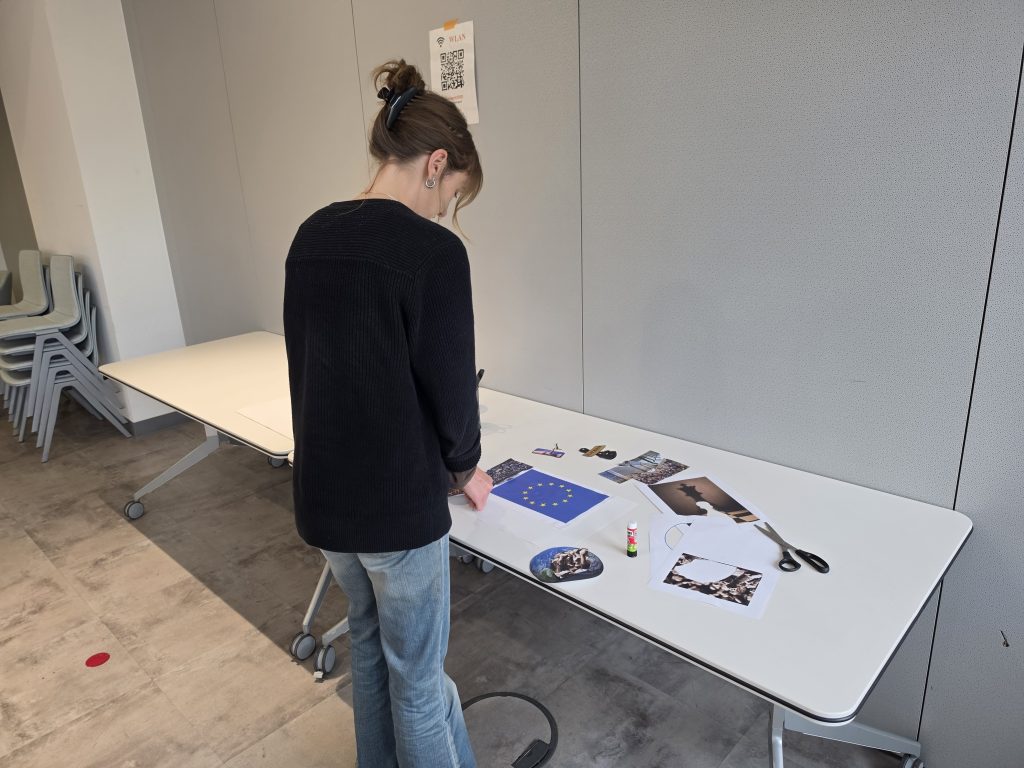
In the next step, participants turned their maps into visual collages. By cutting out and arranging images, they experimented with how relationships between elements can be represented through spatial composition. The process was deliberately iterative, as participants continually added to and revised their collages by searching for and printing new images whenever they felt something was missing.
In the final segment, each participant presented their collage in a short lightning talk, followed by a collective reflection on the collage-making process. A key insight was how the visual work brought overlooked elements to the surface.
In one project on biometrics, for example, children had previously been represented only in relation to the collection of their biometric data, emphasizing the process rather than the children themselves. The collage instead positioned them as actors in their own right.
Participants left with a practical understanding of situational analysis and fresh, creative ways to reflect on their research and uncover relations that otherwise might remain hidden.
Join us for the workshop „Prompting Ethnography: Experiments with LLMs in Fieldnotes, Analysis, Writing, and Reflexivity“ for researchers and students with intermediate experience in ethnography who would like to explore and critically discuss the potential role of AI in ethnographic research. The workshop will take place on October 29, 2026 (10am–2pm) at the Weizenbaum Institute in the Flexroom (A1_04), and will be led by Prof. Dr. Paula Bialski (University of St. Gallen & WI) and Prof. Dr. Götz Bachmann (University of Siegen). This workshop is organized by the Weizenbaum PhD Network “Research in Practice”, coordinated by Katharina Berr and Jana Heim, and supported by the Weizenbaum Methods Lab.
What could AI offer in ethnographic research and where does it flatten, overinterpret, invent, or produce false coherence and what new forms of reflection become necessary and possible? In this experimental and hands-on workshop participants will work through exercises involving scribbles, diary writing, analytical interpretation, essay drafting, and reflection. We will examine how LLMs can act as interlocutors, critics, and writing partners, sometimes through deliberately assigned roles, while also asking how researchers can retain responsibility for what is generated, revised, accepted, or rejected. The workshop is especially relevant for doctoral researchers, ethnographers, qualitative researchers, and teachers interested in AI and methodology. Participants are invited to bring short excerpts from their own scribbles, fieldnotes, or research memos, although sample material can also be provided.
The event is hybrid. It is open to QPD. To learn more, please visit our program page. We look forward to welcoming you!
Join us for the workshop “Visualizing Situatedness – Situational Analysis through Maps and Collages” on October 8, 2026, where Franziska Zirker will introduce participants to Situational Analysis and collage-based mapping as tools for qualitative data analysis.
Qualitative research seeks to understand how people, technologies, institutions, discourses, and material environments become entangled in complex situations. Situational Analysis is an interpretative qualitative approach that helps researchers make these relational complexities visible through mapping.
This workshop introduces participants to the basics of Situational Analysis (e.g., creating situational maps from one’s own research material) and to an innovative collage-based extension of the method (e.g., translating maps into digitally sourced images and assembling them into physical collages). Participants will have the opportunity to apply what they have learned to their own research projects and to discuss how image selection, printing, cutting, and re-assembly shape analytical thinking.
The workshop is designed for researchers at any career stage and with any level of prior methodological experience; no prior knowledge is required, and research projects at any stage are welcome. Seats are limited to 15 participants. To learn more, please visit our program page. We look forward to welcoming you!
Join us for the workshop Introduction to LaTeX and Overleaf on September 10, 2026, where Roland Toth and Jochen Knaus will introduce participants to the use of Latex through Overleaf for scientific and technical writing. This workshop is organized by the Methods Lab and Research Management at WI.
LaTeX is a typesetting system and markup language for scientific and technical writing with many advantages over Microsoft Word and similar software packages. Overleaf, which is hosted as a web service at the Weizenbaum Institute, enables collaborative writing projects using LaTeX. This workshop introduces participants to the basics of Overleaf (e.g., setting up an account, creating a project, collaboration, and file management) and to the fundamentals of LaTeX (e.g., formatting, packages, and citations). Participants will have the opportunity to apply what they have learned within a small project.
The workshop is designed for researchers (and student assistants) who have no/limited experience with LaTeX/Overleaf.
Seats are limited. To learn more, please visit our program page. We look forward to welcoming you!
We are pleased to announce the launch of a new local instance of OpenQDA, now accessible at https://openqda.intern.weizenbaum-institut.de/. This instance is hosted within the Weizenbaum Institute and provides researchers with a dedicated, secure environment for qualitative data analysis. As of now, LDAP authentication is not yet implemented, so access requires being on the Weizenbaum Institute network or connected via VPN. To create a new account, please access the link at the bottom of the landing page.
OpenQDA, developed by ZeMKI at the University of Bremen, is a free, open-source, web-based alternative to the commercial software MAXQDA. It supports core coding functions, follows the REFI standard for project interoperability, and enables collaborative workflows with versioning and shared codebooks. The platform also offers basic visualizations and is designed with GDPR-compliant data handling in mind.
This local instance builds on our earlier announcement of OpenQDA and reflects our commitment to open, collaborative, and ethically responsible research practices. The full source code is available on GitHub under the GNU Affero General Public License v3.0, and the ZeMKI welcomes feedback and contributions from the research community.
We encourage all researchers to explore the platform and help shape its development!
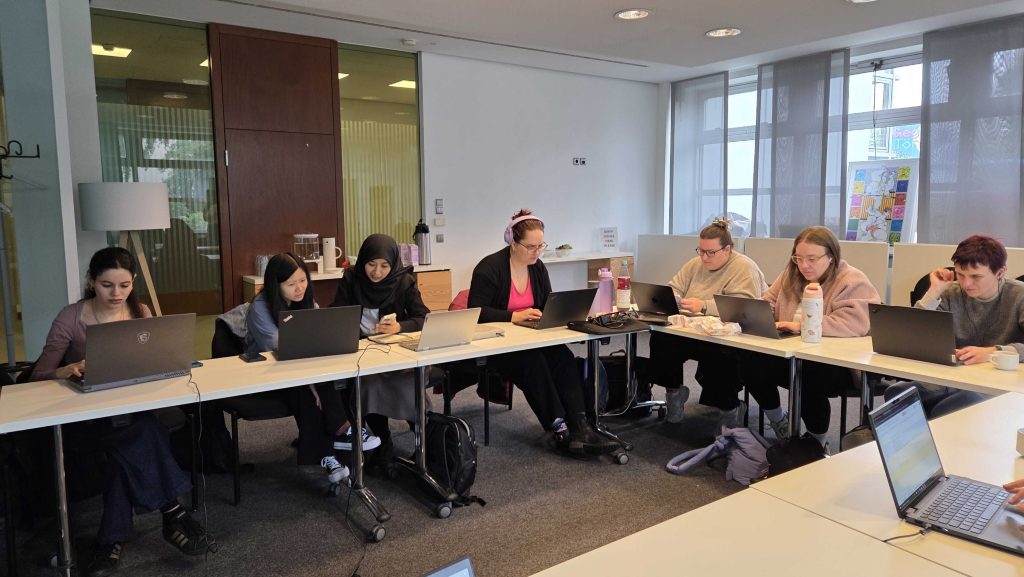
Researchers from Freie Universität Berlin and Weizenbaum Institute gathered on May 12-13, 2026, for a workshop on digital ethnography jointly organized with the DiMES and Methods Lab.
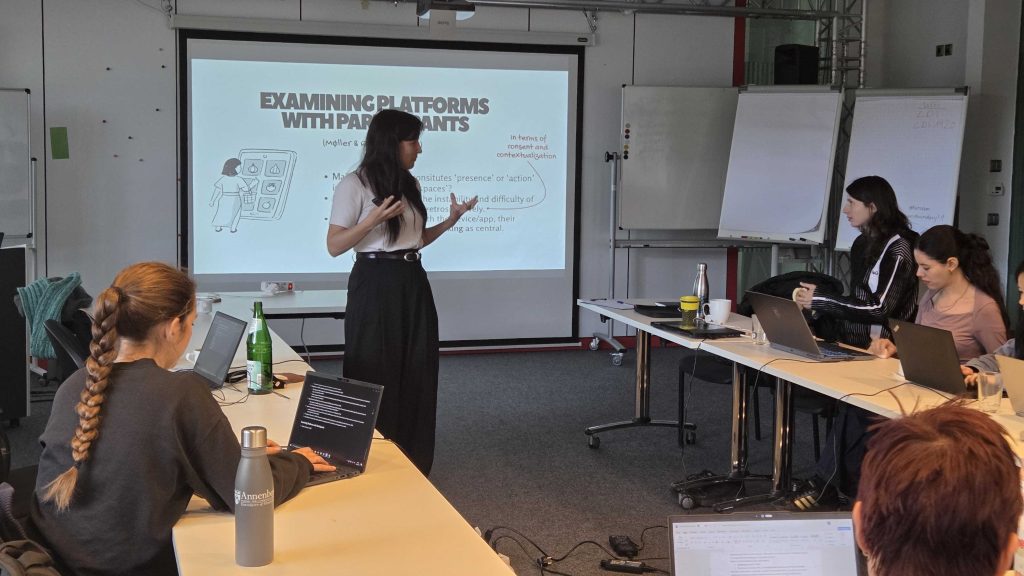
Daniela Jamarillo-Dent introduces the scroll-back method
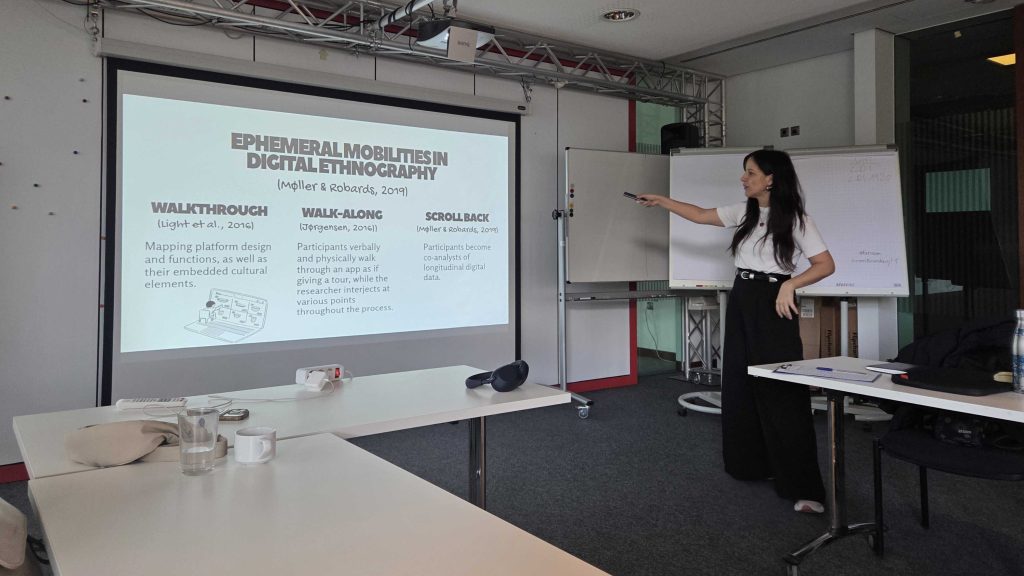
The workshop introduced the theoretical foundations of digital ethnography and explored a range of methodological approaches, including walkthrough, walk-along, and scroll-back techniques, alongside hands-on exercises focused on the platforms TikTok and Instagram. The workshop was led by Dr. Daniela Jaramillo-Dent (University of Zurichand Università della Svizzera italiana).
Daniela Jamarillo-Dent introduces different techniques in digital ethnography
Participants learned about conducting digital ethnographic research on social media platforms and explored how platform affordances and vernaculars shape online behavior, engagement, and forms of connection, with particular attention to marginalized communities and hard-to-reach groups. Through guided walkthrough exercises examining digital platforms, researchers reflected on field note-taking, multimodal analysis, reporting practices, and different approaches to sampling social media content. The subsequent scroll-back exercise focused on user-centered research approaches, incorporating users into the study process, and interviewing research participants.
Participants engaged in workshop exercises
Discussions emphasized the importance of researcher positionality and reflexivity in digital ethnographic research, as well as researcher well-being, informed consent, and the well-being of research participants. Overall, the workshop provided practical methodological tools and critical perspectives for conducting ethically grounded digital ethnographic research on platforms.
Join us for the workshop Walking Through and Scrolling Back: Digital Ethnographic Methods for Platform Research, organized by the Methods Lab. On May 12–13, 2026, Dr. Daniela Jaramillo-Dent will introduce participants to innovative ethnographic approaches for studying visual and interactive social media platforms.
This hands-on workshop focuses on two complementary methods: the walkthrough method and the scroll back method. Participants will learn how to engage directly with platform interfaces to better understand how design features, technological mechanisms, and cultural references shape user experiences. In addition, the scroll back method will be explored as an interview-based adaptation, inviting participants to revisit their own platform histories and reflect on their interactions and meaning-making processes. Through practical exercises and examples from digital communities, the workshop offers valuable insights into how discourses emerge and evolve on visual platforms such as Instagram and TikTok.
The workshop is designed for beginner to intermediate researchers who are interested in expanding their qualitative methodological toolkit.
Seats are limited. To learn more, please visit our program page. We look forward to welcoming you!
Great interest in the 12 high-density presentations
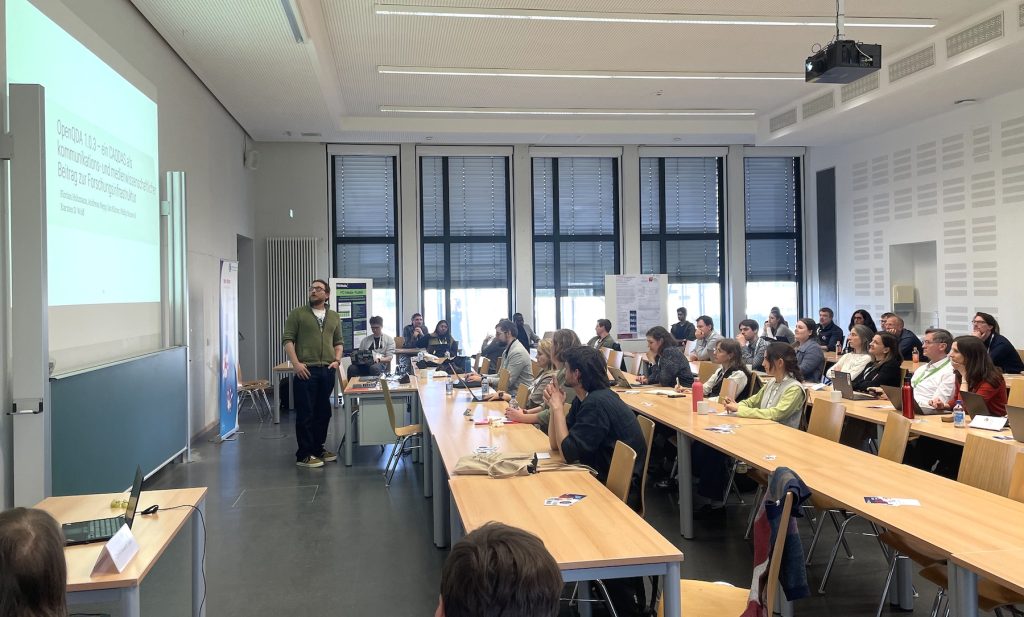
On March 19, 2026, the “Data, Archive & Tool Demos” panel returned at the annual conference of the German Communication Association (DGPuK) in Dortmund. Co-hosted by the Methods Lab lead Christian Strippel, colleagues and the GESIS Methods Hub, the panel brought together researchers to present and exchange reusable research data sets, archives, collections, and research software that promote transparency, collaboration, and methodological innovation in communication and media studies.
A total of 12 projects were presented, including the Platform Governance Archive, OpenQDA, the GESIS Pretest Database, the German Scandal Database, FID Media Publish, and a community data trustee for researching the far right online. The projects were first introduced in short presentations. Afterwards, interested colleagues from the audience could learn more about each project at poster and demo stations. As was the case two years prior, interest in the format was very high. This motivates us to continue offering this format in the future.
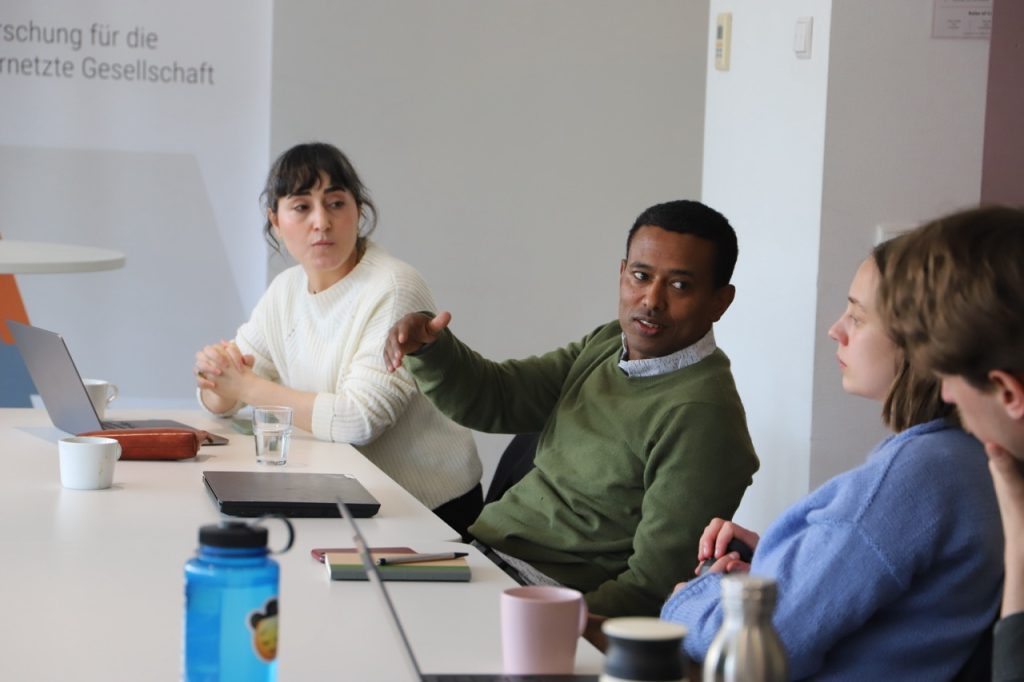
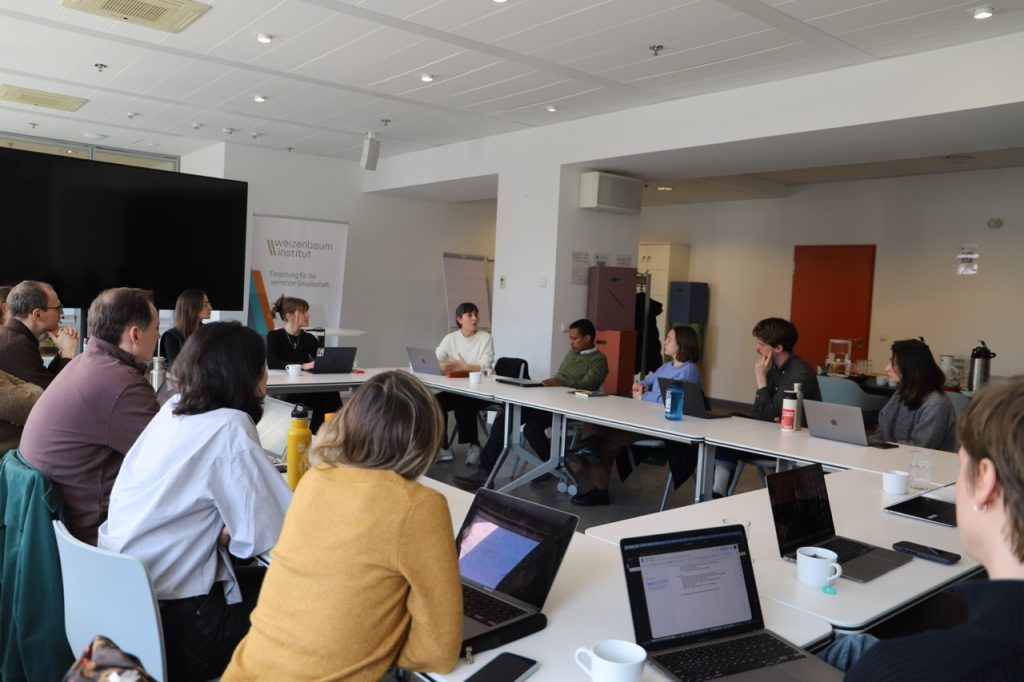
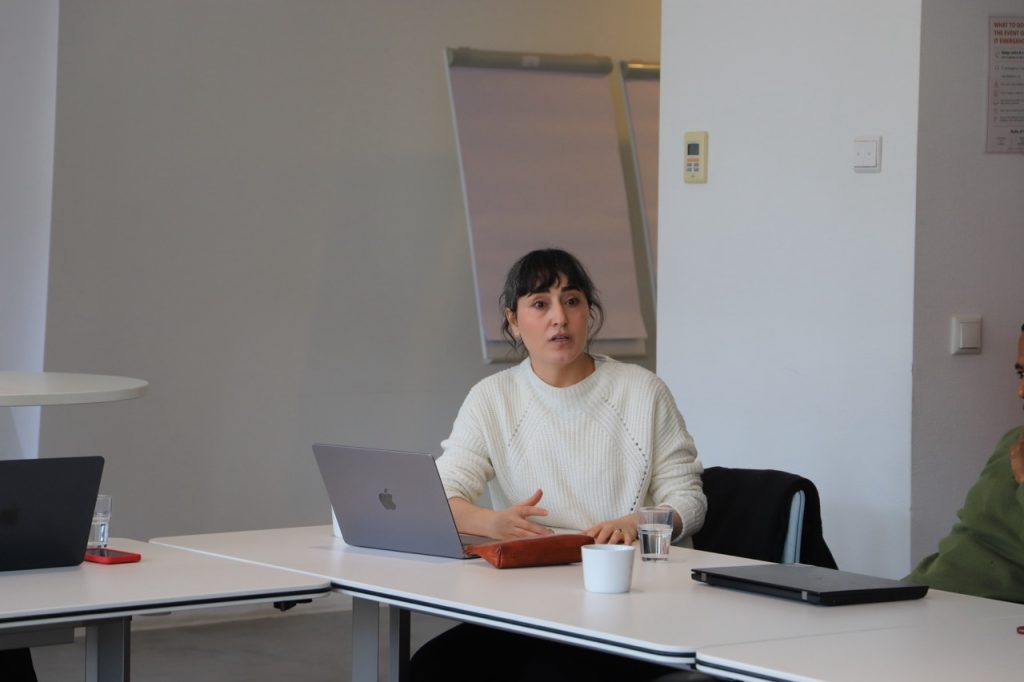
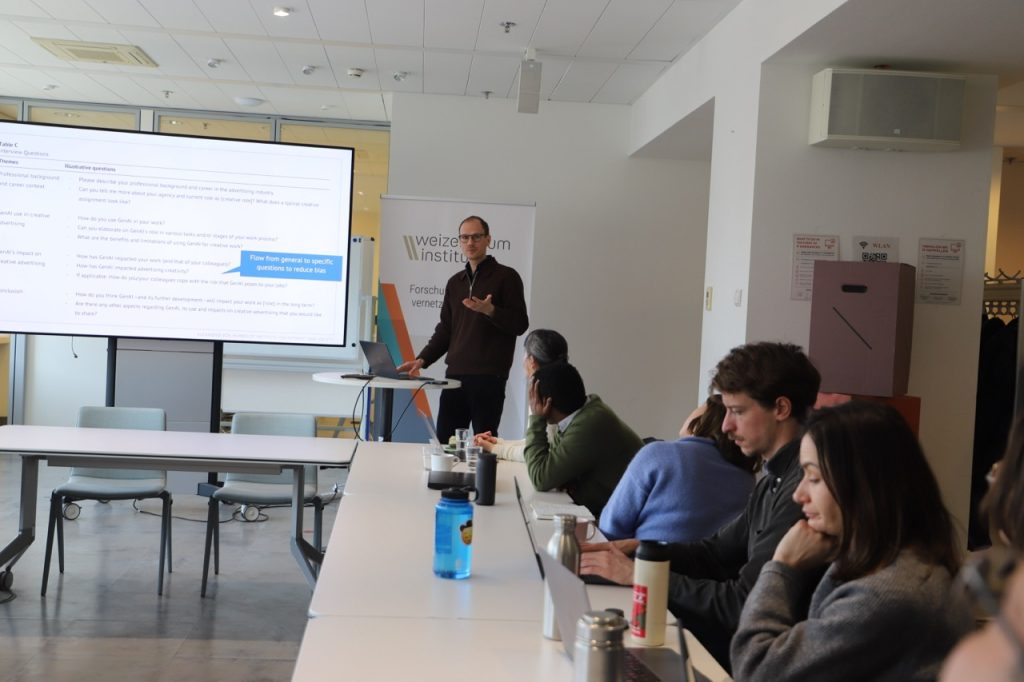
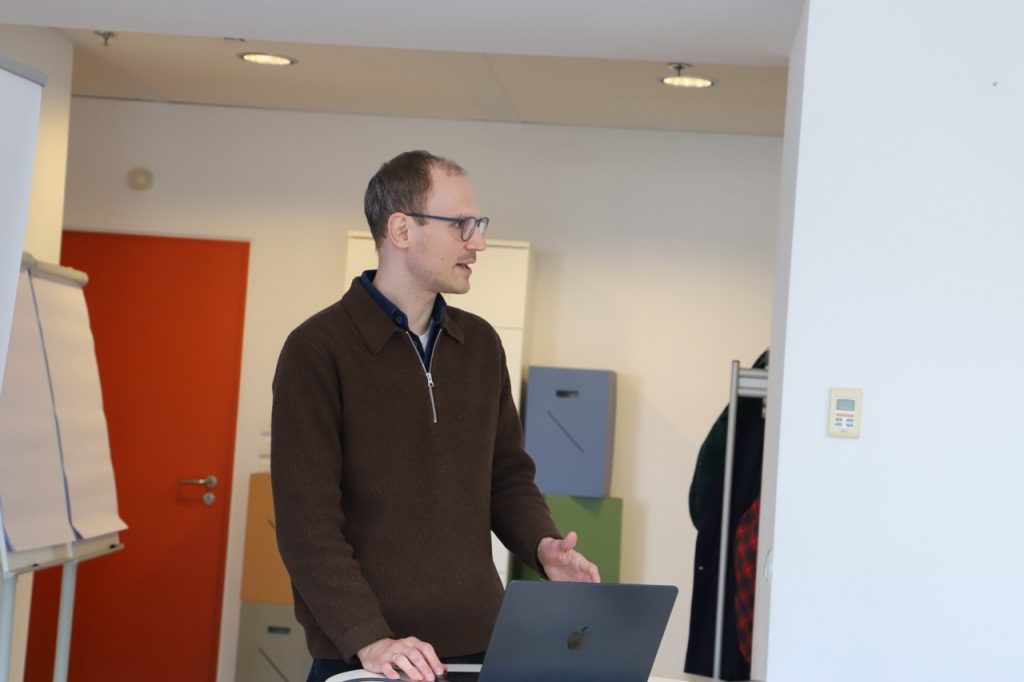
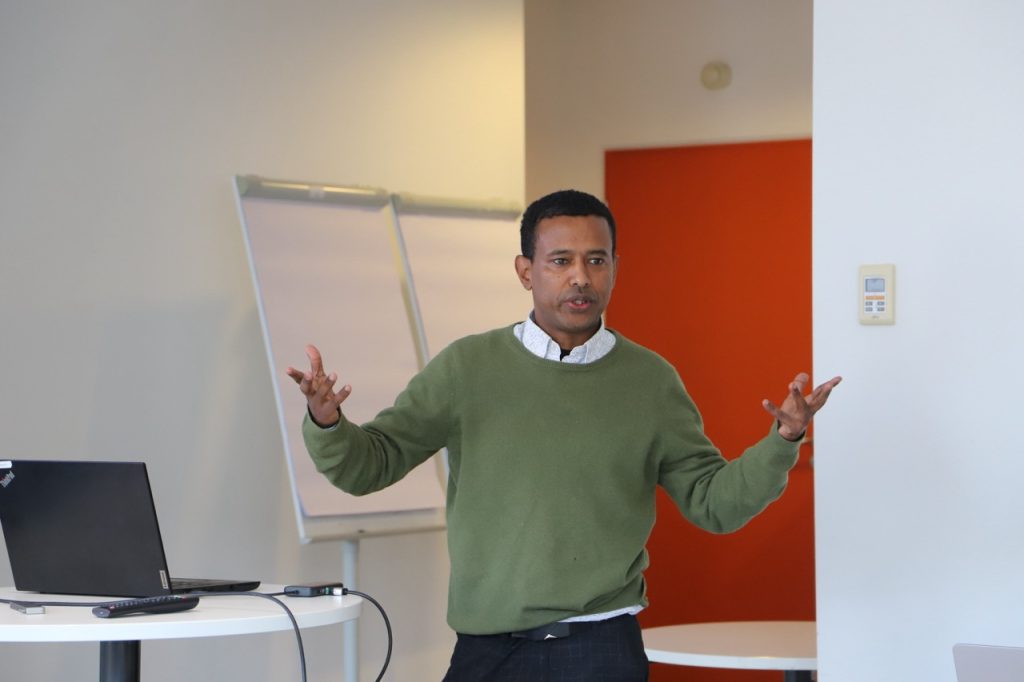
On March 19th, PhD researchers and postdocs from the WI, together with colleagues from partner institutions including DeZIM, FU Berlin, and WBZ, participated in a hands-on workshop on qualitative interviews as a method of data collection. With participants at different stages of their academic careers, the workshop offered a lively and collaborative space to reflect on both the practical challenges and methodological nuances of interview-based research.
The session began with short inputs from Zozan Baran (FU Berlin), Samuel Zewdie Hagos (DeZIM), and Georg von Richthofen (HIIG). Drawing on their own research experiences, they shared insights into what makes qualitative interviews both rewarding and demanding. Meaningful interviews are not only about asking the “right” questions, but also about building trust, remaining reflexive, and approaching the research process with care and attentiveness.
A recurring theme throughout the workshop was positionality: how researchers are perceived, how they position themselves, and how this shapes the interview situation. While shared language or similar backgrounds can help establish rapport, the speakers emphasized that these factors do not erase existing asymmetries. Instead, they highlighted the importance of continuously reflecting on expectations, power dynamics, and vulnerabilities on all sides of the interaction.
This kind of reflection, participants noted, starts well before entering the field. Engaging deeply with theory and existing literature was framed as essential preparation – captured in the idea of approaching interviews with “an open mind, but not an empty head.”
Beyond interview design, the workshop also explored the broader conditions under which interviews take place. Discussions addressed practical considerations such as the choice of setting (online vs. in person) and how each shapes the interaction. Ethical questions also played a central role, particularly when working with sensitive or potentially traumatic topics.
In the moderated discussion that followed, participants connected these themes to their own research projects. Conversations around locality, navigating difficult situations, and managing the emotional demands of working with vulnerable groups led to a rich exchange of perspectives and strategies.
Rather than offering a fixed set of rules, the workshop highlighted the iterative nature of qualitative interviewing: analyze, adapt, and refine.
Manage Cookie Consent
To provide the best experiences, we use cookies to store and/or access device information. Consenting to these technologies will allow us to process data such as browsing behavior or unique IDs on this site. Not consenting or withdrawing consent, may adversely affect certain features and functions.
Functional
Always active
The technical storage or access is strictly necessary for the legitimate purpose of enabling the use of a specific service explicitly requested by the subscriber or user, or for the sole purpose of carrying out the transmission of a communication over an electronic communications network.
Preferences
The technical storage or access is necessary for the legitimate purpose of storing preferences that are not requested by the subscriber or user.
Statistics
The technical storage or access that is used exclusively for statistical purposes.The technical storage or access that is used exclusively for anonymous statistical purposes. Without a subpoena, voluntary compliance on the part of your Internet Service Provider, or additional records from a third party, information stored or retrieved for this purpose alone cannot usually be used to identify you.
Marketing
The technical storage or access is required to create user profiles to send advertising, or to track the user on a website or across several websites for similar marketing purposes.