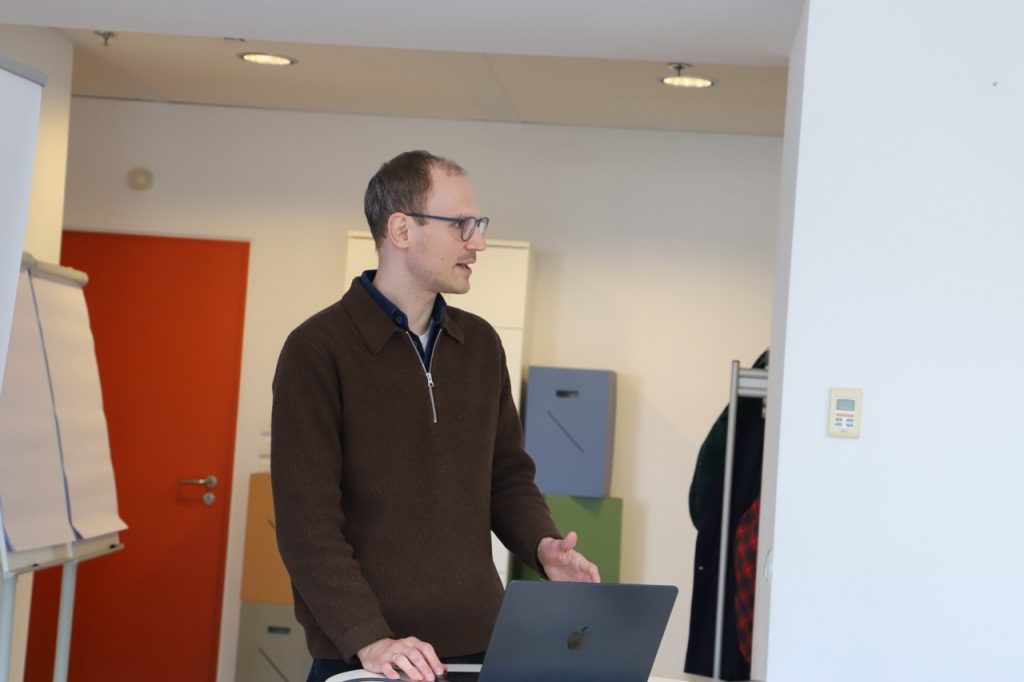
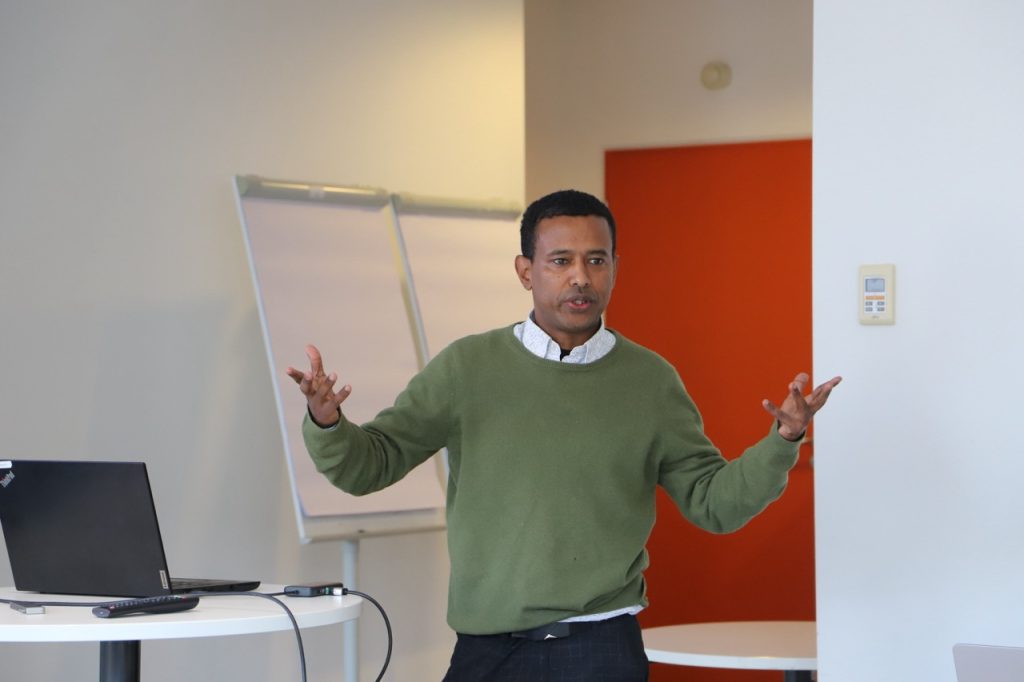
Join us for the workshop Qualitative Interviews in Practice, organized by the Methods Lab at the Weizenbaum Institute. On March 19, 2026, three experienced researchers will share insights from their hands-on work with qualitative interviews.
The workshop focuses on practical experience, reflection, and methodological exchange. Each invited expert will give a short input based on their own research practice, addressing topics such as planning and preparing interviews, conducting interviews in different contexts, training interviewers, handling challenging situations, and reflecting on lessons learned. The inputs will be followed by an open discussion, where participants can bring their own projects, questions, and experiences.
The workshop is open to researchers at different stages of their careers—from those preparing their first interviews to those with extensive field experience who are interested in exchanging perspectives and best practices.
To learn more, please visit our program page. We hope to see you there!
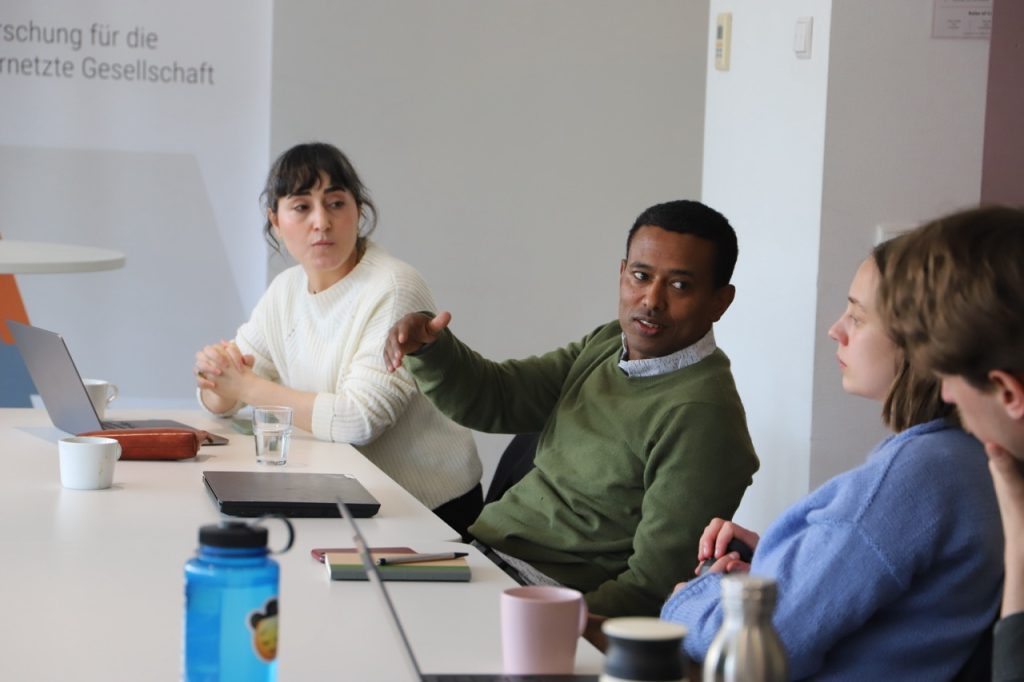
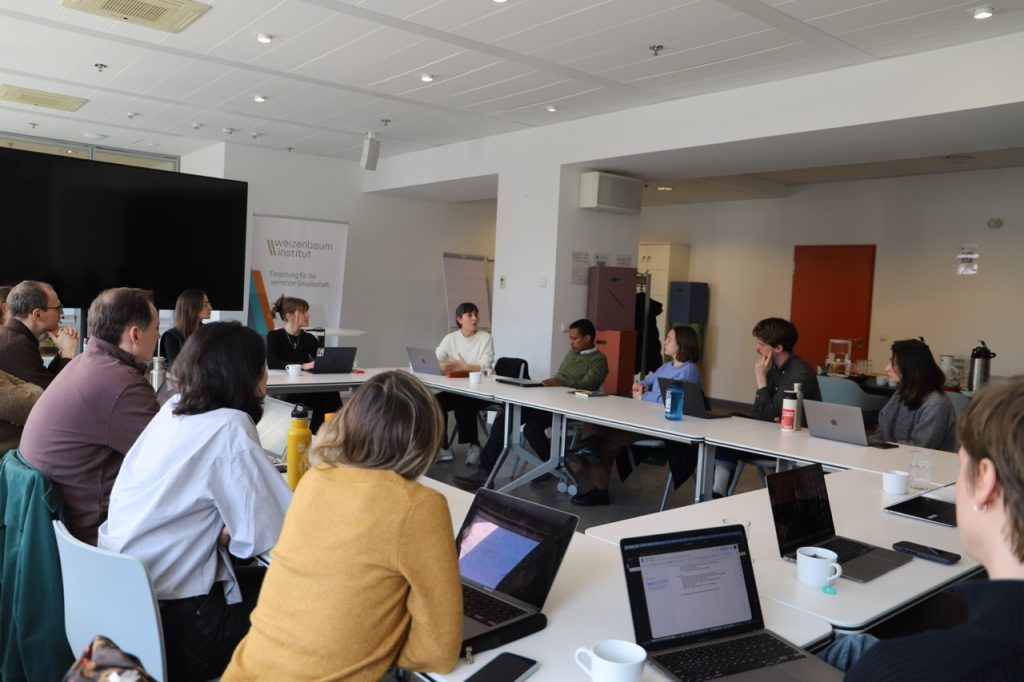
On November 26 2024, Maximilian Heimstädt, Professor of Digital Governance & Service Design at the Helmut Schmidt University in Hamburg, shared his experiences and expertise in applying qualitative methods to studying algorithms in organizations. This workshop was co-organized by the Methods Lab and the Research in Practice – PhD Network for Qualitative Research, coordinated by Katharina Berr and Jana Heim.
The workshop focused on the complexities of studying algorithms from an interpretivist social science perspective; not only the potentials and risks people ascribe to them, but how they are made sense of, enacted, negotiated and integrated into everyday work settings. Drawing on joint research with Simon Egbert on predictive policing, Max shared how he gained access to public sector organizations, approached team-based multi-sited ethnographic fieldwork and learned to understand complex technologies developed and implemented across different empirical sites and over time.
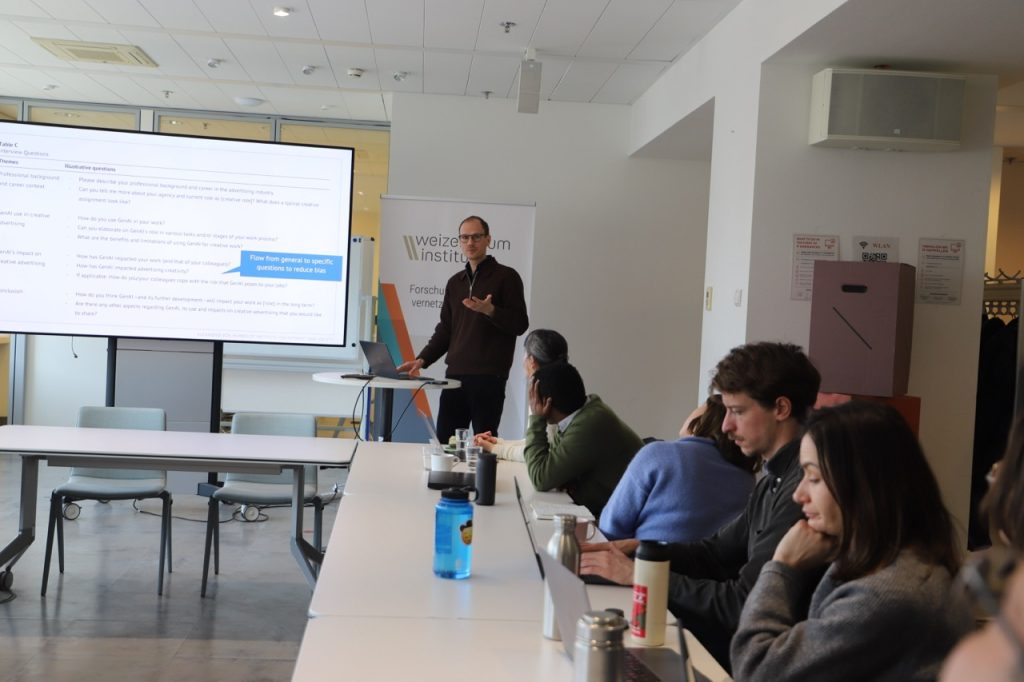
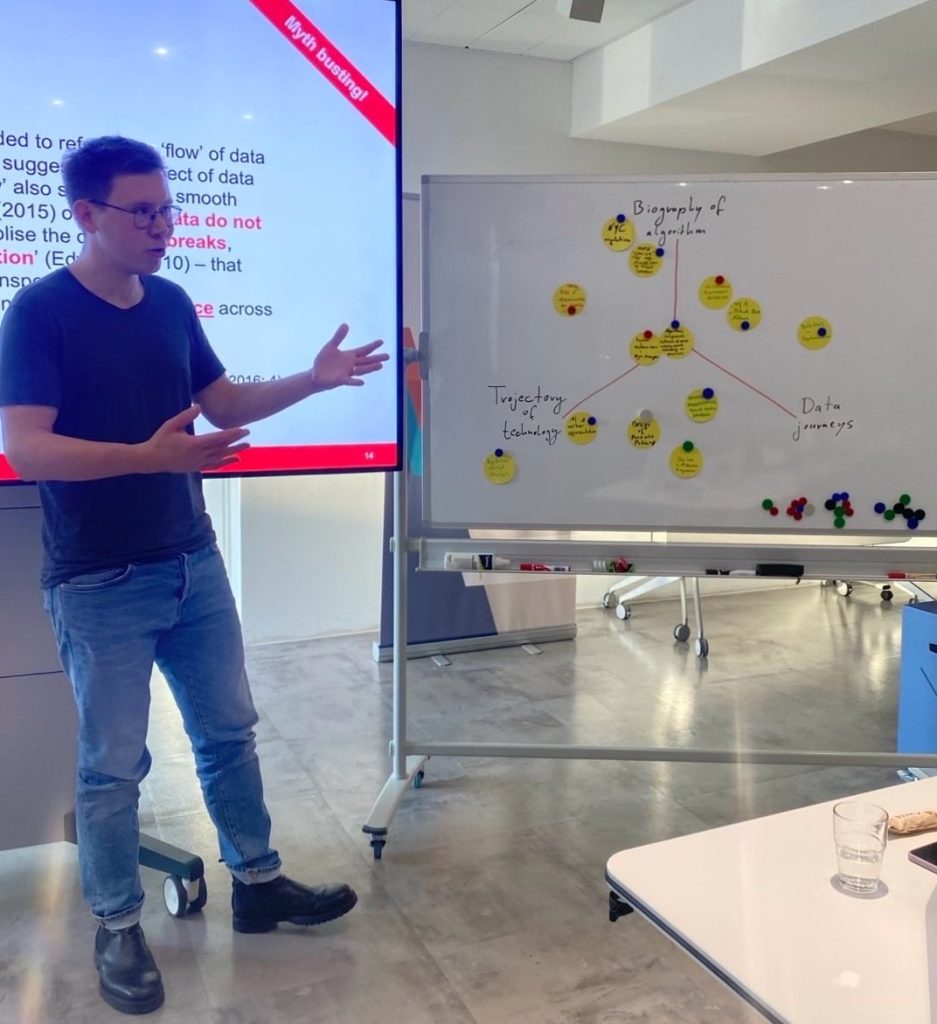
Maximilian Heimstädt presents theoretical approaches to research algorithms in practice
Max introduced three central theoretical approaches from organization studies and critical data studies to research algorithms in practice: technology trajectories, biographies of algorithms, and data journeys that all afford different analytical lenses and offer more nuanced understandings of algorithmic systems. The approach of technology trajectories expands research of the design and use of technologies by integrating broader questions of power, ideology, and institutional change (Bailey & Barley, 2020). Approaching digitalization research from a biographies approach draws attention to the dynamic development of digital technologies, understood as ‘entangled, relational, emergent, and nested assemblages’ across different organizational contexts and time (Glaser, Pollock, & D’Adderio, 2021). Finally, the data journeys approach allows to ‘focus attention on the life of data as they move through space and time, through different sites and cultures of data practice’, and offers a perspective that is attentive to frictions of such data journeys (Bates, Lin, & Goodale, 2016). Based on an introduction of these approaches, the workshop participants explored how their own research has been (both implicitly and explicitly) informed by these approaches, and discussed their practical and epistemic potentials and limits.
The Idea Behind the ‘Research in Practice’ Workshop Series
Qualitative research often feels polished in academic publications, but the reality is that the process can be quite complex at times, and full of twists and turns. We have created this workshop series to center the ‘backstage’ of qualitative research. The goal is to hear directly from scholars about how they conduct their work – the challenges, the unexpected discoveries and unplanned adaptations, the specific methods and digital tools used, and the strategies that help them arrive at interesting and valuable findings. With this workshop format and research network, we aim to create a space for qualitative researchers within and beyond the Weizenbaum Institute to connect, collaborate, and learn from one another.
What to Expect
Each workshop session in the series brings a new perspective on qualitative (digital) research. Invited scholars walk us through their research processes, focusing on how they have handled the challenges of their work. This includes designing studies, building rapport with research participants, analyzing different kinds of qualitative data, theorizing as method, and navigating ethical considerations. The sessions are interactive, offering opportunities to ask questions, share ideas, and discuss in depth. By opening up the processes behind qualitative research, we hope to demystify the work and facilitate conversations that help researchers at all levels.
If you would like to join our network and to be informed about upcoming events, reach out to Katharina Berr and Jana Heim.
Manage Cookie Consent
To provide the best experiences, we use cookies to store and/or access device information. Consenting to these technologies will allow us to process data such as browsing behavior or unique IDs on this site. Not consenting or withdrawing consent, may adversely affect certain features and functions.
Functional
Always active
The technical storage or access is strictly necessary for the legitimate purpose of enabling the use of a specific service explicitly requested by the subscriber or user, or for the sole purpose of carrying out the transmission of a communication over an electronic communications network.
Preferences
The technical storage or access is necessary for the legitimate purpose of storing preferences that are not requested by the subscriber or user.
Statistics
The technical storage or access that is used exclusively for statistical purposes.The technical storage or access that is used exclusively for anonymous statistical purposes. Without a subpoena, voluntary compliance on the part of your Internet Service Provider, or additional records from a third party, information stored or retrieved for this purpose alone cannot usually be used to identify you.
Marketing
The technical storage or access is required to create user profiles to send advertising, or to track the user on a website or across several websites for similar marketing purposes.