Join us for the workshop Introduction to LaTeX and Overleaf on September 10, 2026, where Roland Toth and Jochen Knaus will introduce participants to the use of Latex through Overleaf for scientific and technical writing. This workshop is organized by the Methods Lab and Research Management at WI.
LaTeX is a typesetting system and markup language for scientific and technical writing with many advantages over Microsoft Word and similar software packages. Overleaf, which is hosted as a web service at the Weizenbaum Institute, enables collaborative writing projects using LaTeX. This workshop introduces participants to the basics of Overleaf (e.g., setting up an account, creating a project, collaboration, and file management) and to the fundamentals of LaTeX (e.g., formatting, packages, and citations). Participants will have the opportunity to apply what they have learned within a small project.
The workshop is designed for researchers (and student assistants) who have no/limited experience with LaTeX/Overleaf.
Seats are limited. To learn more, please visit our program page. We look forward to welcoming you!
Interested in learning new research methods, building your programming skills, or exploring how AI can support your research? Instats is a global learning platform providing live and recorded training seminars in statistics, programming, research methods, and AI. Most seminars require a fee, but several sessions are also freely available after registration.
For example, many researchers have already benefitted from Peter Gruber’s presentations, such as AI Tools for Researchers 2.0. This fast-paced overview of AI tools supports every stage of the research process, from literature reviews and data analysis to academic writing. It also demonstrates how to make effective use of popular chatbots, specialized AI tools, and open-source models, showing what is convenient and what is worth paying for.
Those looking to explore more advanced applications may be interested in the workshops offered by Piers Steel and Hadi Fariborzi. Beyond ChatGPT: Agentic AI as 24/7 Research Assistants focuses on using agentic AI to automate research tasks such as data collection, analysis, and reporting for both qualitative and quantitative AI-driven methods, while Beyond ChatGPT: Using AI to Enhance Research Workflows covers ethical considerations when integrating AI tools into everyday research activities to improve the quality and efficiency of your work.
The platform also provides opportunities to network with hundreds of peers across institutions and disciplines, discover open research positions, and access additional professional development resources. Take a look!
On April 28, 2026, researchers from the WI gathered for an engaging workshop introducing Open Paper – a next-generation content management system designed to break free from the constraints of traditional publishing formats. The session centered on a core idea: knowledge shouldn’t be confined to linear, static documents. Instead, Open Paper enables dynamic, interactive publications that adapt to how readers actually engage with content. By replacing rigid PDFs and blog posts with modular, navigable experiences, the platform empowers authors to create richer, more intuitive reading experiences. The workshop was organized by Merja Mahrt and Esther Görnemann from WI together with the Methods Lab, and Markus Brandenburg and Fabian Hassel from the agency that has developed Open Paper – MADEFUL – were invited as speakers.
In the workshop, participants explored how Open Paper transforms static text into living publications. Through a hands-on demo, they discovered features like:
Flexible layouts with multi-column arrangements and responsive design
Interactive expositions that allow readers to dive deeper into subtopics while maintaining context
Self-contained chapters that make content accessible even when read out of order
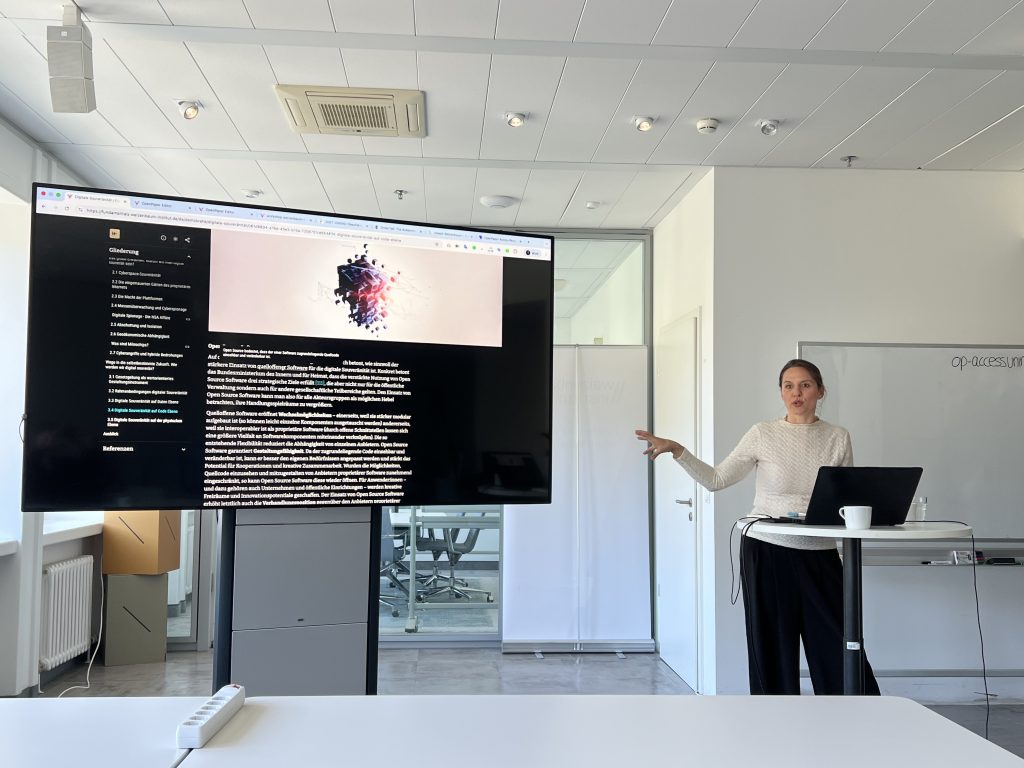
Esther Görnemann provides details on the production of the fundamental on digital sovereignty
The real impact was seen in an overview over digital sovereignty as part of the Weizenbaum fundamental series – a flagship example of what’s possible. With interactive visuals, side-by-side comparisons, and layered explanations, the publication achieved an average reader engagement of 26 minutes, which is a clear indicator of depth and interest. Even more telling: traffic increasingly comes from AI tools like ChatGPT, signaling that the content is not only readable but reusable and referable in emerging digital workflows.
Beyond design, Open Paper was built on strong ethical and technical foundations: open source, open access, GDPR-compliant, CO₂-neutral hosting, SEO-friendly, and fully accessible. Like the Weizenbaum Institute, other institutions can also deploy a custom instance aligned with their corporate design, ensuring brand consistency and long-term ownership.
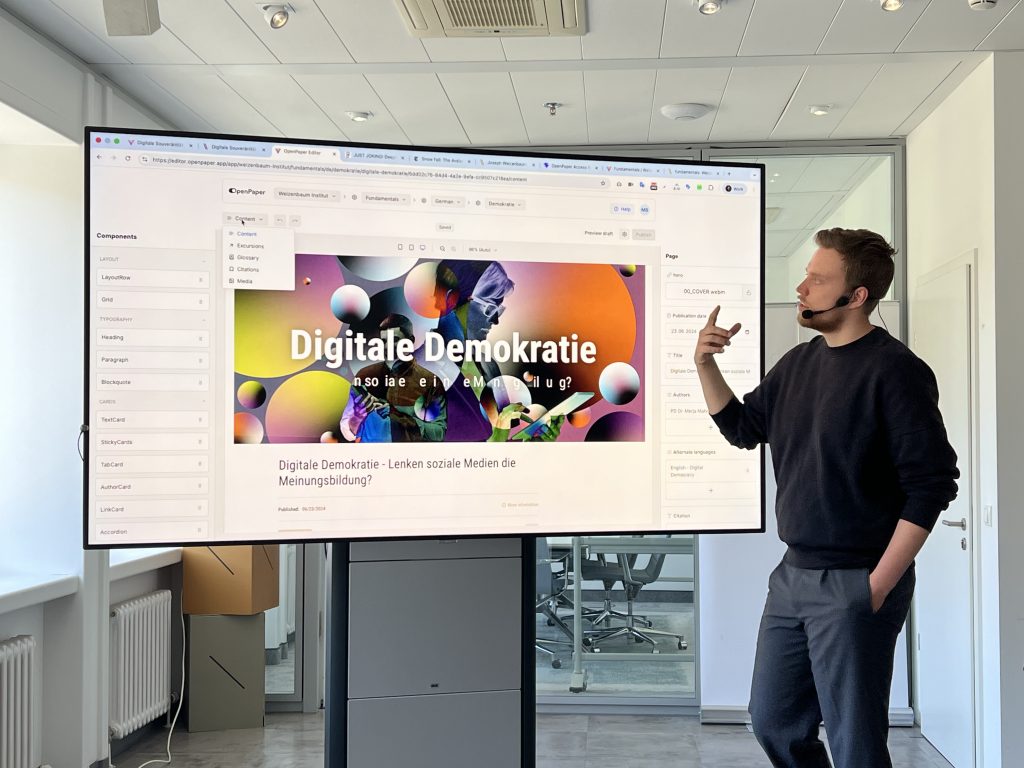
Markus Brandenburg explains how to add and edit different types of content in Open Paper
The workshop’s interactive phase let participants discover how to build a page in real time using a three-panel interface:
Left: Structure and layout tools (grid, headings, visual elements)
Center: Live preview of content and layout
Right: Contextual editing options for the selected element
Beyond the workshop itself, the presenters further created a tutorial video made available on the WI’s Open Paper instance.
Rather than offering a one-size-fits-all template, Open Paper encourages authors to think critically about audience, structure, and engagement. It represents a shift in how we think about knowledge sharing: interactive, inclusive, and built for the future.
OpenQDA is an accessible and easy-to-use alternative to the qualitative data analysis tool MAXQDA, which can often feel complicated, individualized, or expensive. It is being developed by our colleagues at ZeMKI at the University of Bremen. It offers functions similar to MAXQDA, but is free, open-source, web-based, and designed to support researchers through a flexible, collaborative workflow.
Although still in its early alpha phase, OpenQDA already supports core functions of qualitative coding and follows the REFI standard, making it possible to exchange projects with other programs. It enables collaborative workflows by allowing multiple researchers to work on shared projects from different locations, with versioning features that help track changes and maintain transparency. Users can further explore their data through basic visualizations, including distributions, frequencies, and configurable word clouds. In addition, a shared codebook library encourages researchers to exchange codebooks, ideas, and feedback within the growing OpenQDA community. An instructional overview video providing a brief guided tour of these features is available here, and detailed guidelines to using OpenQDA are provided here.
True to the open-source approach, the complete source code has been published on GitHub under the GNU Affero General Public License v3.0, where anyone can explore the project and follow its progress. For example, a recent issue with assigning documents to projects was resolved through close collaboration between users and the software developers, who discussed potential solutions together and then implemented the necessary changes. Other topics still under discussion, such as improving accessibility, are being addressed alongside the development roadmap, which outlines upcoming features and planned improvements.
OpenQDA is designed to support GDPR-compliant data handling, with users retaining full control over their data. As researchers adopt and test the platform, their feedback directly informs its ongoing development, particularly through planned and emerging plug-in mechanisms that extend functionality. Together, these principles position OpenQDA as a community-driven platform that supports qualitative data analysis while inviting researchers to co-create the tools shaping its future.
Writing is at the core of scientific work: papers, research proposals, reports, and reviews are some of the most important elements of scientists’ everyday tasks. Although the act of writing is a complex subject itself, the tools that enable it are manifold and affect the efficiency of any research project.
Google Docs has established itself as a helpful tool for scientific writing over the past years. It is reminiscent of the well-known Microsoft Word, and is easy-to-use and convenient. As a web service, it does not require installing dedicated software, but works in any modern browser. Its main feature is collaborative writing – documents can be shared either via email address or a link, and edited together in real time, also allowing to post comments and track changes.
At the same time, LaTeX has grown in popularity as an alternative typesetting system and markup language for scientific and technical writing. As opposed to software like Microsoft Word and Google Docs, it distinguishes between the source of a text document which consists of the content as well as formatting instructions, and the rendered document (e.g., in .pdf format) which presents the formatted content accordingly. This separation between source and result enables more precision, since content as well as formatting are both provided in plain text, without applying the formatting right away. There are different LaTeX editors, such as TeXstudio or TeXMaker, that allow to create and edit documents. However, especially in reproducible research, LaTeX is popular for its compatibility with programming frameworks and libraries such as R Markdown, Quarto, Sweave, or PyLaTeX. These allow users to merge text and formatting with information in the programming environment (e.g., analysis results, tables, or figures) using placeholders that are automatically replaced with the current information whenever the document is rendered.
Overleaf is a tool for text editing using LaTeX, but featuring the advantages of Google Docs: It does not require installing separate software, as it is accessible through a web browser, and it enables collaborative writing. While Overleaf can be used on the official website either for free (with limited features) or with a subscription plan (to unlock more), it is also possible to host an instance locally.
To meet the growing demandat WI, avoid subscription costs, and have full control over stored and shared data, we hereby present the brand new Overleaf instance at the Weizenbaum Institute. It not only allows WI researchers, but also their external colleagues to work on text documents together in real time. Overleaf (Community Edition) is hosted by the IT department and administered by the Methods Lab, and it can be accessed at https://overleaf.weizenbaum-institut.de. To use it, an account is required, which can be requested from the Methods Lab. For further instructions, please consult the Overleaf page in the internal Wiki at WI.
Most commercial, browser-based generative AI tools have usage or licensing restrictions that prevent users from exploring their full potential. All members of the Weizenbaum Institute now have access to a new chatbot providing unrestricted use of generative AI, thanks to an institution in Göttingen that locally hosts a range of large language models under the name ChatAI. The platform is essentially like ChatGPT, but it is hosted in Germany, and can be used free of charge without licensing costs. It also includes other useful tools, such as ImageAI, which generates images from text prompts, and VoiceAI, which can interpret human speech.
To get started, simply visit the Academic Cloud website and click on Login in the top right corner. On the login page, choose Federated Login on the right-hand side, then select Weizenbaum Institute from the list of institutions. From there, you can log in using your WI account credentials and follow the on-screen instructions.
After logging in, open the ChatAI tool in the list of services. Within ChatAI, the model selector at the top center of the interface allows you to choose from different language models depending on your needs. Click the ChatAI logo in the top left corner to easily switch between different tools to generate text, images, or work with audio input. With unlimited access to these tools, you can find efficient new ways to enhance your research and creative projects.
The Methods Lab is eager to present the upcoming Show and Tell: OpenQDA—A Sustainable and Open Research Software for Collaborative Qualitative Data Analysis, scheduled for Monday, November 18th. This Show and Tell will be directed at the Weizenbaum Institute, but is also available to members joining online.
Florian Hohmann with the ZeMKI research unit at the University of Bremen, will be facilitating the event. This workshop provides a live demonstration and open discussion that introduces researchers to the structure of this web-based, collaborative, and open-source tool on qualitative data analysis. The ZeMKI team will present a thorough guide of instruction for using OpenQDA, as well as the idea’s goals and implications. Following this, all participants are encouraged to ask questions in the allotted Q&A period. The second segment of this workshop will invite on-site participants to engage in a research community session, for an exchange of knowledge that supports the future development of this application. To get a sense of prospective demands, we request that researchers bring the relevant data analysis formats of published works such as tables or visualizations.
To learn more, visit our program page. We are looking forward to your participation!
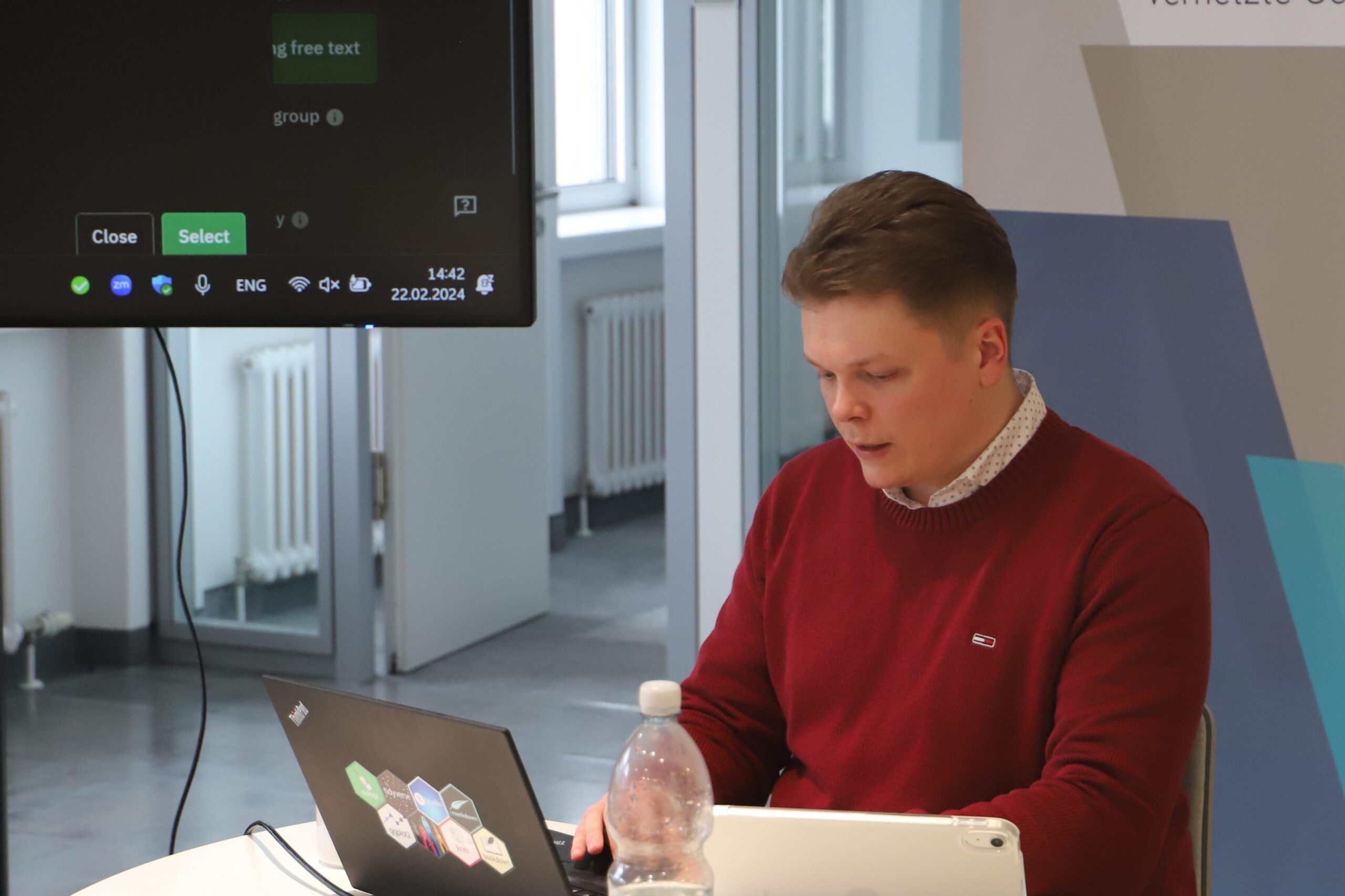
The use of online surveys in contemporary social science research has grown rapidly due to their many benefits such as cost-effectiveness and ability to yield insights into attitudes, experiences, and perceptions. Unlike more established methods such as pen-and-paper surveys, they enable complex setups like experimental designs and seamless integration of digital media content. But despite their user-friendliness, even seasoned researchers still face numerous challenges in creating online surveys. To showcase the versatility and common pitfalls of online surveying, Martin Emmer, Christian Strippel, and Roland Toth of the Methods Lab arranged the workshopIntroduction to Online Surveyson February 22, 2024.
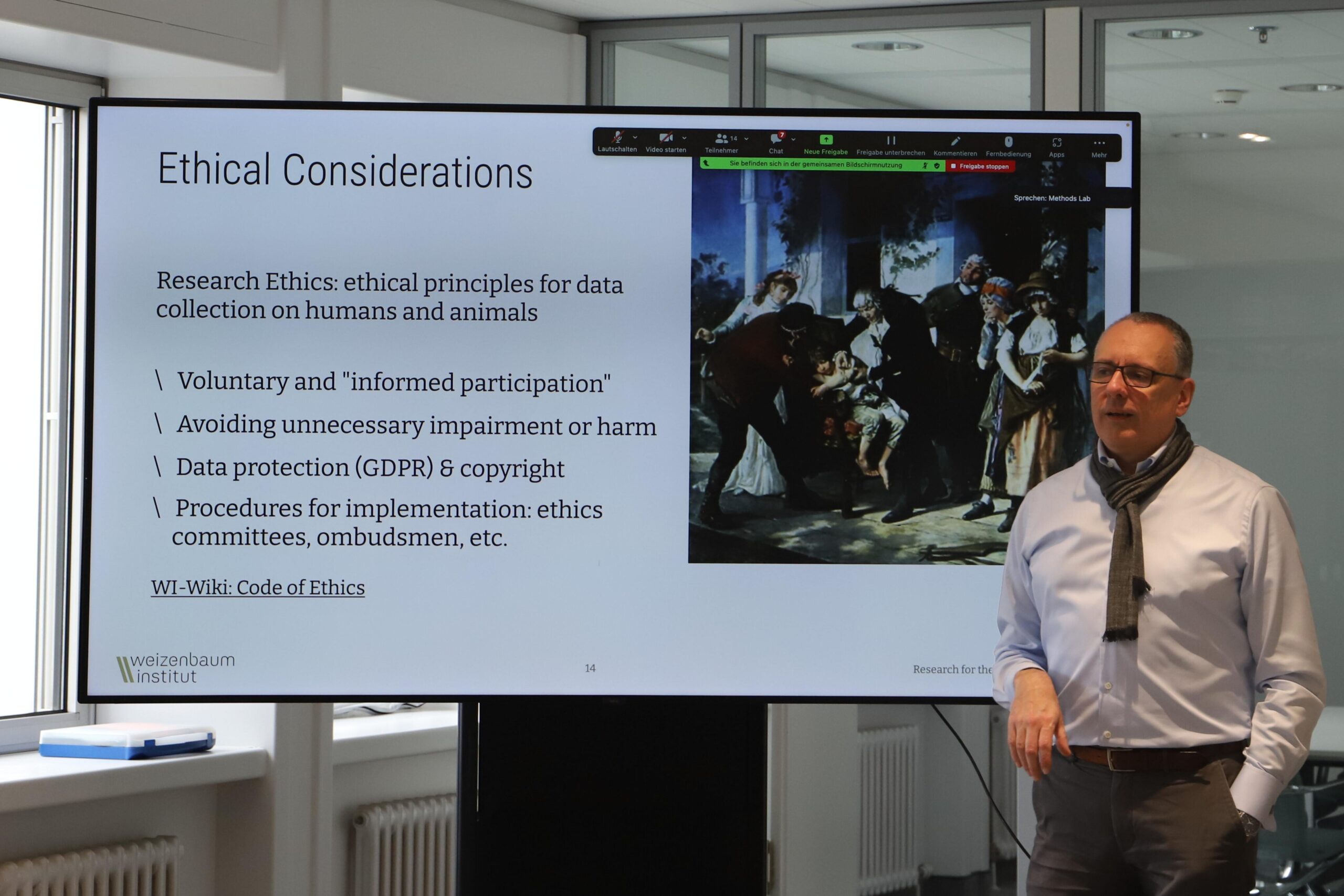
Martin gave a presentation on the design and logic of online surveys.
In the first segment, Martin Emmer provided a theoretical overview of the design and logic of online surveys. He started by outlining the common challenges and benefits associated with interviewing, with a particular emphasis on social-psychological dynamics. Compared to online surveys, face-to-face interviews offer a more personal, engaging, and interactive experience, enabling interviewers to adjust questions and seek clarification of answers in real time. However, they can be time-consuming and expensive and may introduce biases such as the interviewer effect. On the other hand, the process of conducting online surveys presents its own set of challenges, such as limited control over the interview environment, a low drop-out threshold, and particularities connected with self-administration such as the need for detailed text-based instructions for respondents. Nevertheless, self-administered and computer-administered surveys boast numerous advantages, including cost-effectiveness, rapid data collection, the easy application of visuals and other stimuli, and accessibility to large and geographically dispersed populations. When designing an online survey, Martin stressed the importance of clear question wording, ethical considerations, and robust procedures to ensure voluntary participation and data protection.
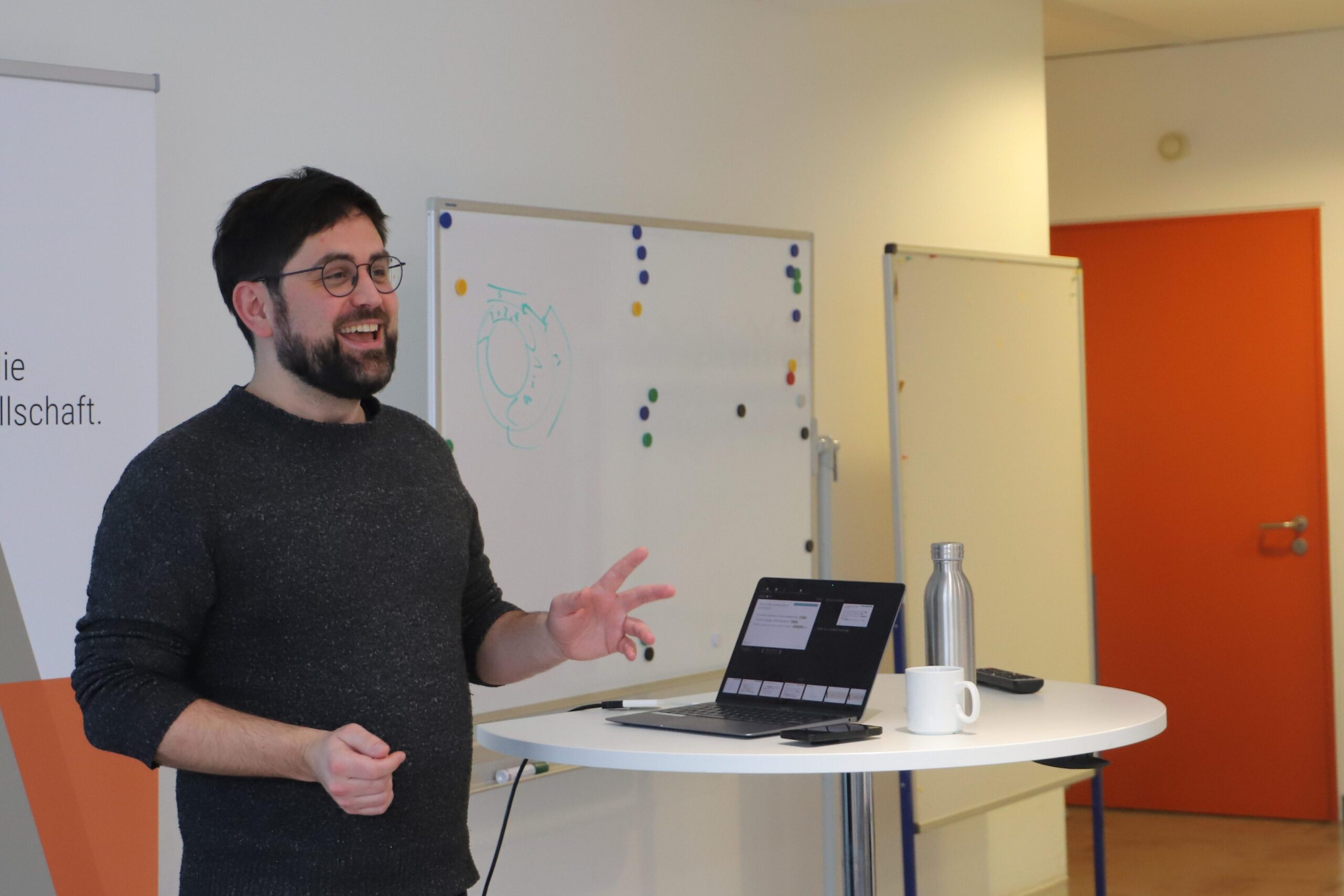
Christian shared his insights on survey creation using online access panel providers.
In the second part of the workshop, Christian Strippel delved into the realm of online access panel providers, including the perks and pitfalls associated with utilizing them in survey creation. Panel providers serve as curated pools of potential survey participants managed by institutions, such as Bilendi/Respondi, YouGov, Cint, Civey, and the GESIS Panel. Panel providers oversee the recruitment and management processes, ensuring participants are matched with surveys relevant to their demographics and interests, while also handling survey distribution and data collection. While the use of online panels offers advantages such as accessing a broad participant pool, cost-efficiency, and streamlined sampling of specific sub-groups, they also have their limitations. Online panels are, for example, not entirely representative of the general population as they exclude non-internet users. Moreover, challenges arise from professional respondents such as so-called speeders who rush through surveys, and straight-liners who consistently choose the same response in matrix questions. Strategies to combat these issues include attention checks throughout the questionnaire, systematic exclusion of speeders and straight-liners, and quota-based screening. To conclude, Christian outlined what constitutes a good online panel provider, and shared valuable insights into how to plan a survey using one effectively.
Participants learned how to create their own survey using LimeSurvey during Roland’s live demo.
The third and final segment of the workshop featured a live demonstration by Roland Toth on how to set up an online survey using the open-source software LimeSurvey, which is hosted on the institute’s own servers. During this live demonstration, he created the very evaluation questionnaire administered to the workshop participants at the end of the workshop. Roland began by providing an overview of the general setup and relevant settings for survey creation. Subsequently, he demonstrated various methods of crafting questions with different scales, display conditions, and the incorporation of visual elements such as images. Throughout the demo, Roland addressed issues raised earlier in the first part of the workshop concerning language and phrasing, emphasizing rules for question-wording and why it is important to ask for one piece of information only per question. The live demonstration was wrapped up with a segment on viewing and exporting collected data. After letting the participants complete the evaluation form, the workshop concluded with a Q&A session.
Level: Beginner/Intermediate Category: Data Analysis
After being well received last year, we’re happy to announce the return of our workshop Programming and Data Analysis with R for its second edition. This two-day intensive workshop led by Roland Toth (WI) will take place on Wednesday, April 10, and Thursday, April 11, at the Weizenbaum Institute.
During the first day, attendees will receive comprehensive training in programming fundamentals, essential data wrangling techniques, and Markdown integration. The second day will center around data analysis, providing participants with the chance to engage directly with a dataset and address a research topic independently. A blend of concepts, coding techniques, and smaller practical tasks will be interspersed throughout both days to reinforce hands-on learning.
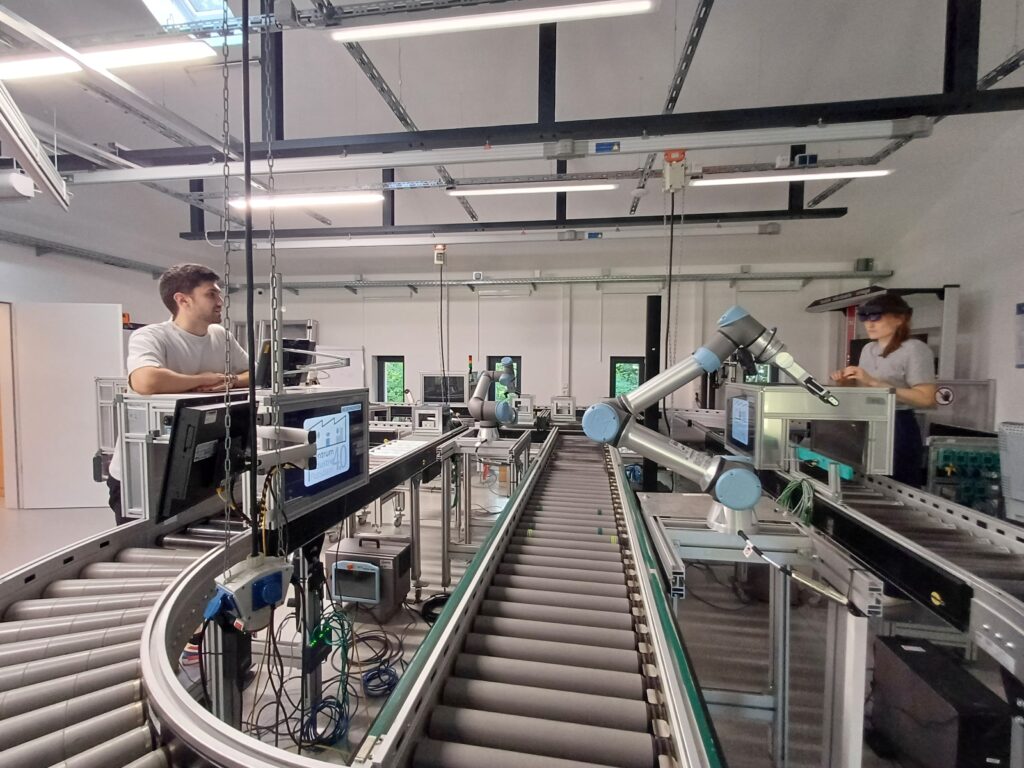
During my visit to the Center for Industry 4.0, I had the opportunity to participate in the pretest of the HoloLens study and learn more about augmented reality-based learning. The goal of the study, which is a collaboration between the research groups ofGergana Vladova(Education for the Digital World) and Martin Krzywdzinski (Working with Artificial Intelligence), is twofold. In the first part, the research groups investigate the effectiveness of different Augmented Reality (AR) designs on learning and compare them to traditional paper-based methods by using eye-tracking. In the second part, they focus on participants’ decision making and disruption management, guided by suggestions from an AI-assisted system. These participants can operate in either a team-based or hierarchical setting.
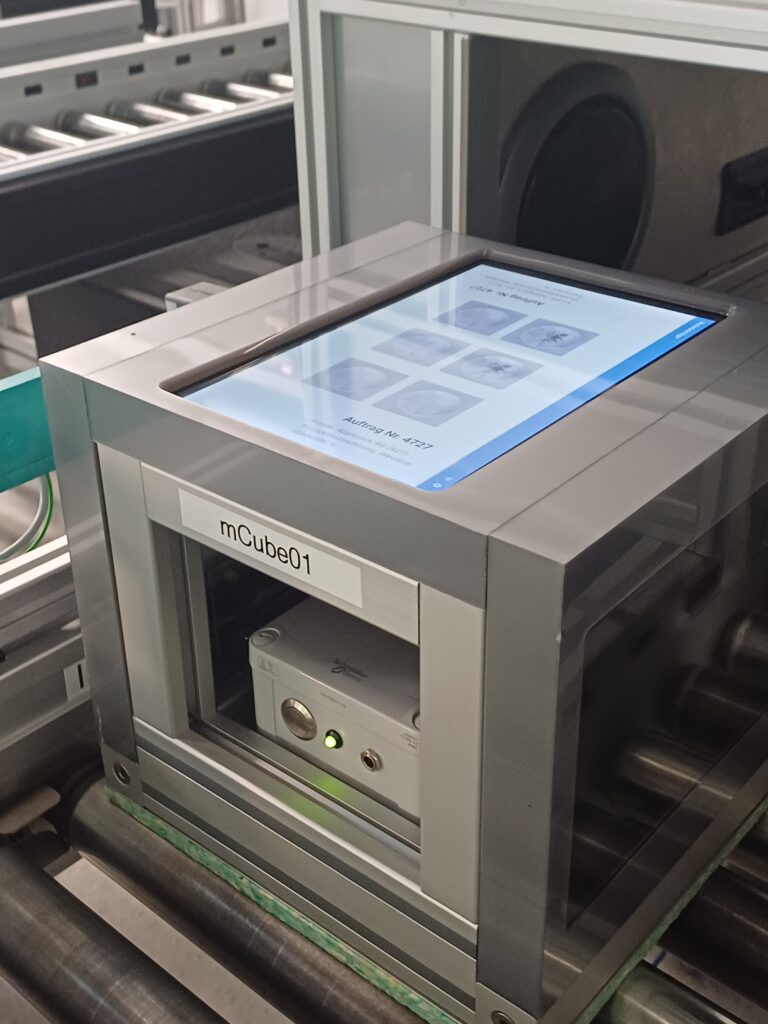
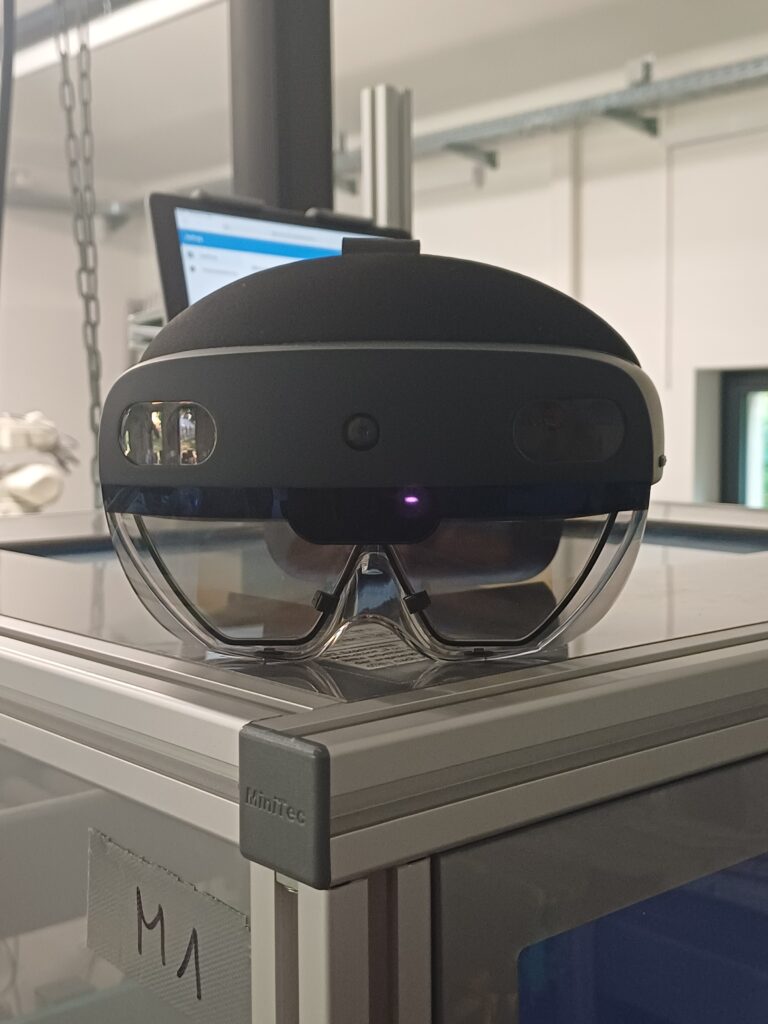
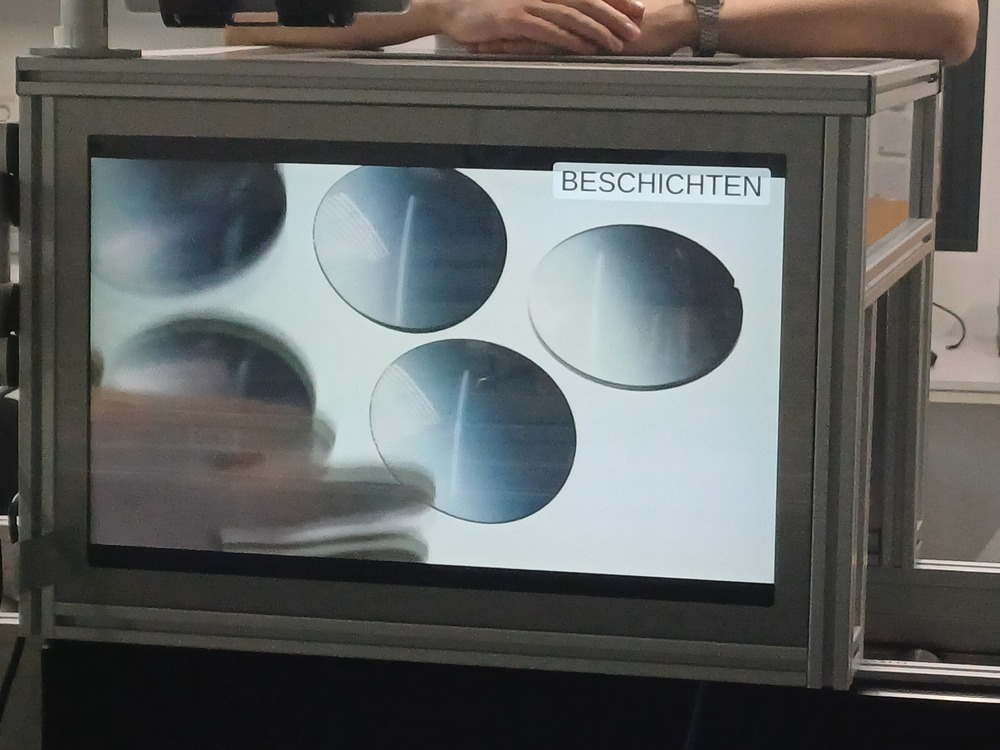
The cube travels along the conveyor belt, its screen showcasing lenses for participants to identify and sort out. The AR glasses used in the HoloLens study.
In the first part of the experiment, participants work in a simulated factory environment where they are tasked with producing lenses. The team uses either AR instructions or traditional paper instructions, depending on the experimental condition. The AR head-mounted display guides the team through tasks such as adjusting machine settings, sorting defective lenses, and other simulated problems. The same principle is used in the other experiments, except in this case, participants rely on paper-based learning instead of AR glasses.
In the second part of the experiment, participants apply what they learned in the first part, but without using the AR glasses or the paper instructions. In addition, the errors they must solve are different from those in the previous part. When presented with a problem, participants are expected to solve it collaboratively through effective communication and with the help of AI.
To measure performance, the study uses traditional metrics such as time and error rates. Between each round, knowledge tests in the form of a questionnaire are administered to assess participants’ recall and comprehension. The hypothesis is that process-integrated learning via Augmented Reality can enhance the learning process.
Nicolas Leins and Jana Gonnerman at the Centre for Industry 4.0 Potsdam.
To provide the best experiences, we use cookies to store and/or access device information. Consenting to these technologies will allow us to process data such as browsing behavior or unique IDs on this site. Not consenting or withdrawing consent, may adversely affect certain features and functions.
Functional
Always active
The technical storage or access is strictly necessary for the legitimate purpose of enabling the use of a specific service explicitly requested by the subscriber or user, or for the sole purpose of carrying out the transmission of a communication over an electronic communications network.
Preferences
The technical storage or access is necessary for the legitimate purpose of storing preferences that are not requested by the subscriber or user.
Statistics
The technical storage or access that is used exclusively for statistical purposes.The technical storage or access that is used exclusively for anonymous statistical purposes. Without a subpoena, voluntary compliance on the part of your Internet Service Provider, or additional records from a third party, information stored or retrieved for this purpose alone cannot usually be used to identify you.
Marketing
The technical storage or access is required to create user profiles to send advertising, or to track the user on a website or across several websites for similar marketing purposes.