Conference Recap: “Data, Archive & Tool Demos” at DGPUK 2026

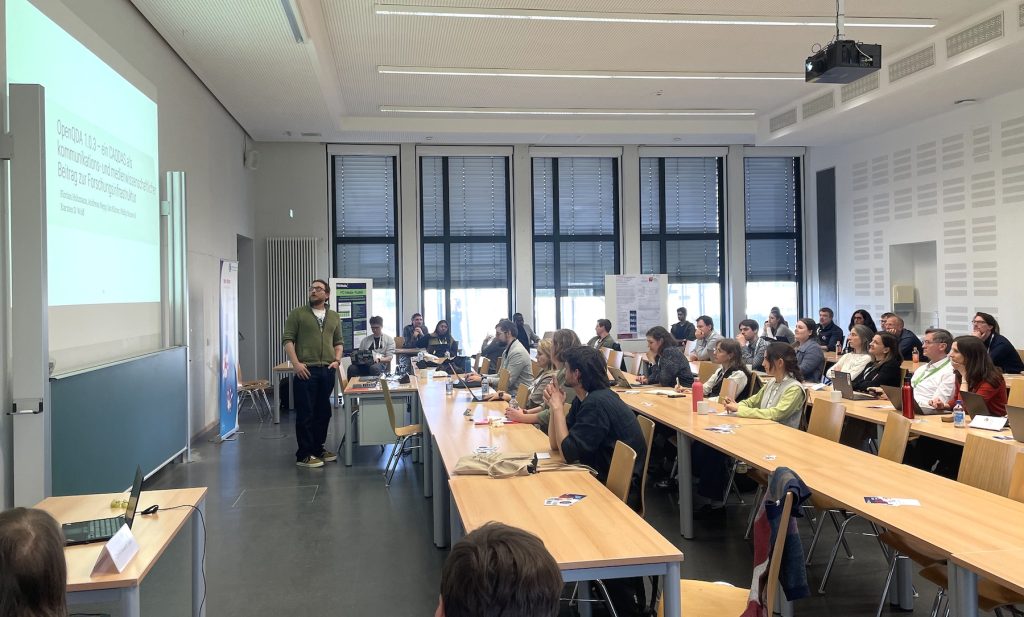
On March 19, 2026, the “Data, Archive & Tool Demos” panel returned at the annual conference of the German Communication Association (DGPuK) in Dortmund. Co-hosted by the Methods Lab lead Christian Strippel, colleagues and the GESIS Methods Hub, the panel brought together researchers to present and exchange reusable research data sets, archives, collections, and research software that promote transparency, collaboration, and methodological innovation in communication and media studies.

A total of 12 projects were presented, including the Platform Governance Archive, OpenQDA, the GESIS Pretest Database, the German Scandal Database, FID Media Publish, and a community data trustee for researching the far right online. The projects were first introduced in short presentations. Afterwards, interested colleagues from the audience could learn more about each project at poster and demo stations. As was the case two years prior, interest in the format was very high. This motivates us to continue offering this format in the future.

Workshop Recap: Reflections on Qualitative Interviews in Practice

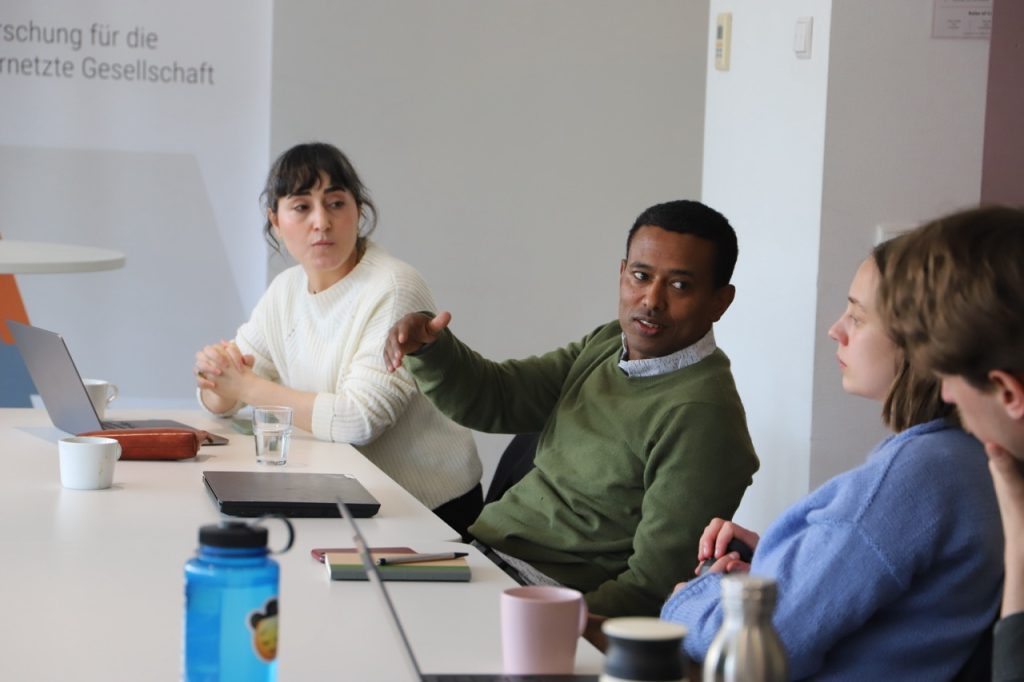
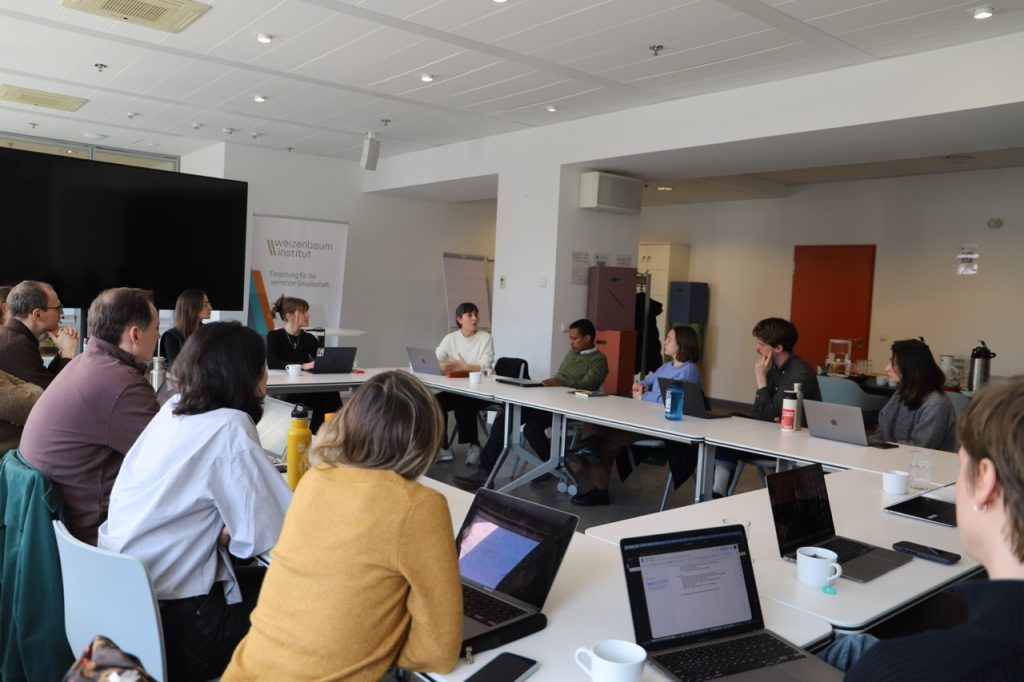
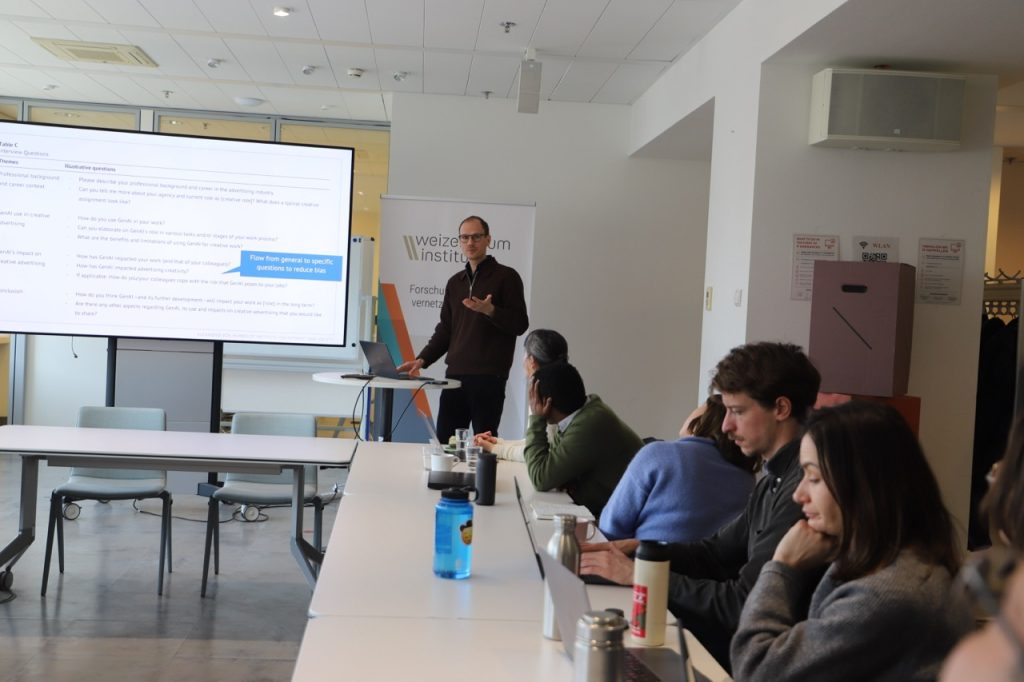
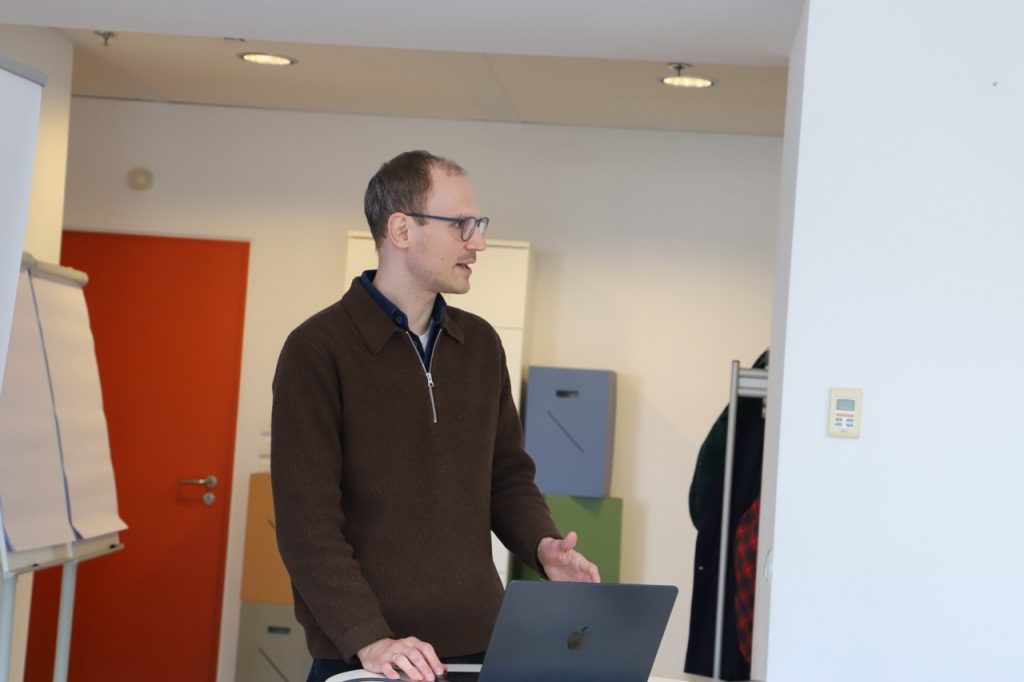
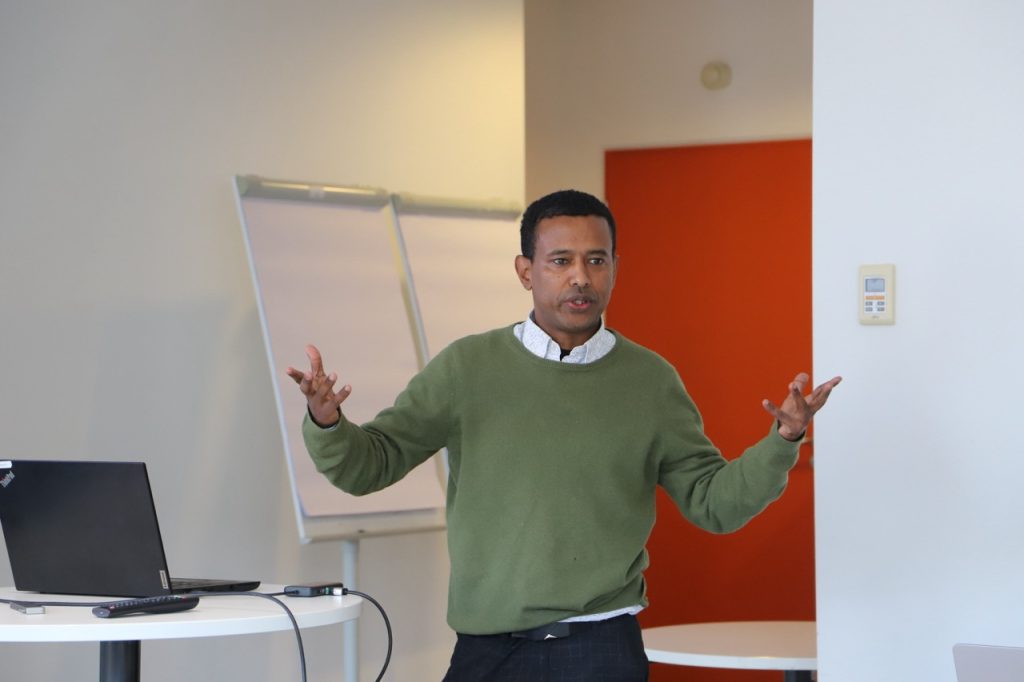
On March 19th, PhD researchers and postdocs from the WI, together with colleagues from partner institutions including DeZIM, FU Berlin, and WBZ, participated in a hands-on workshop on qualitative interviews as a method of data collection. With participants at different stages of their academic careers, the workshop offered a lively and collaborative space to reflect on both the practical challenges and methodological nuances of interview-based research.

The session began with short inputs from Zozan Baran (FU Berlin), Samuel Zewdie Hagos (DeZIM), and Georg von Richthofen (HIIG). Drawing on their own research experiences, they shared insights into what makes qualitative interviews both rewarding and demanding. Meaningful interviews are not only about asking the “right” questions, but also about building trust, remaining reflexive, and approaching the research process with care and attentiveness.

A recurring theme throughout the workshop was positionality: how researchers are perceived, how they position themselves, and how this shapes the interview situation. While shared language or similar backgrounds can help establish rapport, the speakers emphasized that these factors do not erase existing asymmetries. Instead, they highlighted the importance of continuously reflecting on expectations, power dynamics, and vulnerabilities on all sides of the interaction.

This kind of reflection, participants noted, starts well before entering the field. Engaging deeply with theory and existing literature was framed as essential preparation – captured in the idea of approaching interviews with “an open mind, but not an empty head.”

Beyond interview design, the workshop also explored the broader conditions under which interviews take place. Discussions addressed practical considerations such as the choice of setting (online vs. in person) and how each shapes the interaction. Ethical questions also played a central role, particularly when working with sensitive or potentially traumatic topics.

In the moderated discussion that followed, participants connected these themes to their own research projects. Conversations around locality, navigating difficult situations, and managing the emotional demands of working with vulnerable groups led to a rich exchange of perspectives and strategies.

Rather than offering a fixed set of rules, the workshop highlighted the iterative nature of qualitative interviewing: analyze, adapt, and refine. 
Special Panel: “Data, Archive & Tool Demos” at DGPUK 2026 Conference

The “Data, Archive & Tool Demos” panel featured at the 2024 conference of the German Communication Association (DGPuK) will return at this year’s DGPuK conference in Dortmund. On Thursday, March 19, 2026, Methods Lab lead Christian Strippel will host this special panel together with Johannes Breuer, Silke Fürst, Erik Koenen, Dimitri Prandner, and Christian Schwarzenegger, in collaboration with the GESIS Methods Hub.

The panel aims to exchange reusable research data, archives, collections, and relevant research software that strengthen transparency, collaboration, and methodological innovation in communication and media studies. Some of the featured projects include: 

  • MaskBench: a modular framework for benchmarking 2D pose estimation and video de-identification, allowing comparison of models on privacy-masked videos
  • Epigraf 5.2: a research platform for collecting, annotating, linking, and publishing multimodal text data
  • GESIS Pretest-Datenbank: a database providing insights from cognitive pretests, showing how respondents understand, interpret, and answer survey questions for improved questionnaire design 
  • GESIS AppKit: a mobile data collection tool for smartphones, compliant with data protection regulations and free of charge, supporting experience sampling, ambulatory, and ecological momentary assessments
  • GESIS Methods Hub: an open community portal giving tools, tutorials, and interactive environments to explore and apply computational methods
  • OpenQDA 1.0.3: the improved version of the free, open-source, web-based alternative to MAXQDA, providing flexible and collaborative tools for qualitative data analysis
  • Platform Governance Archive (PGA): a long-term repository of social media platform policies, enabling research on how platforms govern communication and track changes over time 
  • FID Media Publish: a central, free research service for communication and media studies, providing tailored literature, open-access publishing support, and specialized resources
  • ComAI Research Space: a collaborative platform coordinating joint data collection on communicative AI, creating an open repository, and investigating emerging media and communication practices

To learn more about the full program and the organizational details of the event, click here! Those interested in joining are welcome to register online until March 17th, or in person by March 20th.

Call for Contributions: “Data, Archives, & Tool Demos” at the 2026 DGPuK Annual Conference

The Methods Lab is excited to announce that the “Data, Archive & Tool Demos” special session will return at the 2026 DGPuK Annual Conference in Dortmund. The event will be co-organized by Methods Lab lead Christian Strippel with Johannes Breuer, Silke Fürst, Erik Koenen, Dimitri Prandner, and Christian Schwarzenegger, in collaboration with the GESIS Methods Hub, a community-oriented network for computational tools and resources.

This year’s session is a continuation of the format introduced at the 2024 DGPuK Conference in Erfurt, in a well-received event. The aim moving forward is to keep the discussion going, and potentially establish this format as a regular feature of the annual conference. Full details of the call for 2026 contributions are available here

Researchers are invited to submit 200–300 word abstracts (German or English) by January 19, 2026. Eligible contributions must have not already been presented in the previous DGPuK sessions, are required to be available for scholarly reuse and must not be managed commercially. Contributions may also be resubmitted only if they have changed significantly, and this must be stated explicitly.

Workshop: Finding Frames with RoBERTa – A Crash Course

The Methods Lab is pleased to host a hands-on workshop led by Dr. Vihang Jumle (University of Bern) on automating frame analysis using RoBERTa. This practical session teaches social science researchers how to apply pre-trained language models to scale text coding – transforming manual content analysis into a fast, reproducible process. Participants will learn to fine-tune models, preprocess data, apply data augmentation, and evaluate results using precision, recall, and cross-validation – using their own research datasets. Designed for intermediate Python users, the workshop emphasizes real-world application and project-based learning. Ideal for researchers in communication studies, political science, and sociology. Register now and bring your data to automate your next analysis!

To learn more, please visit the program page. We hope to see you there!

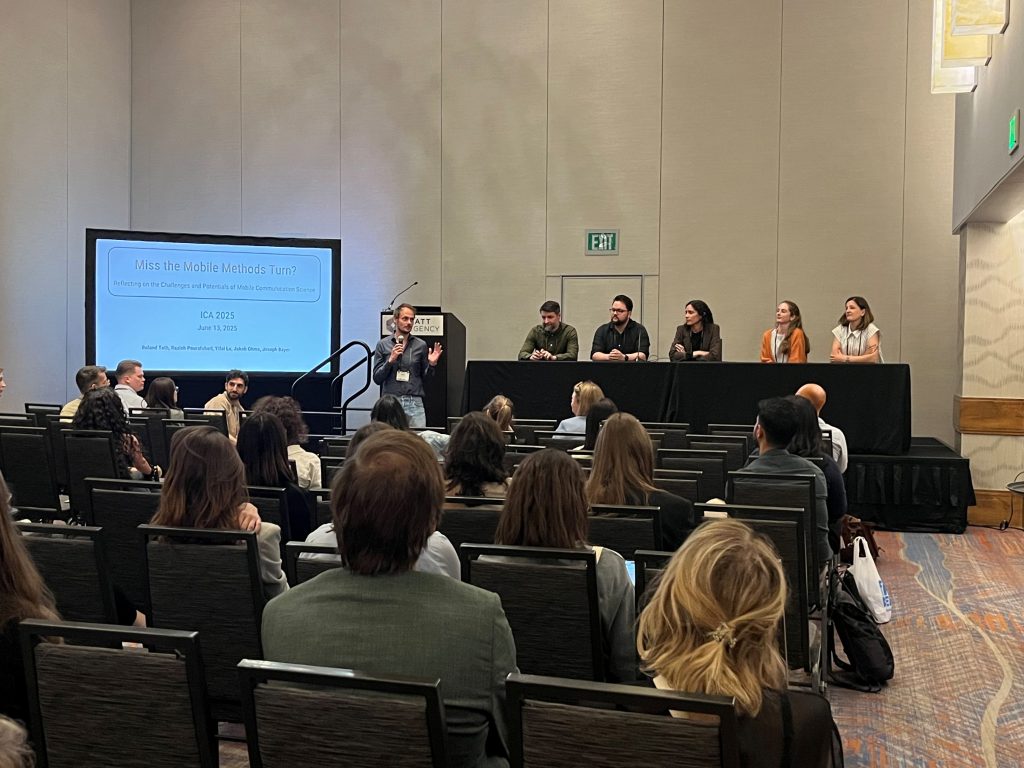
Mobile methods panel at ICA 2025

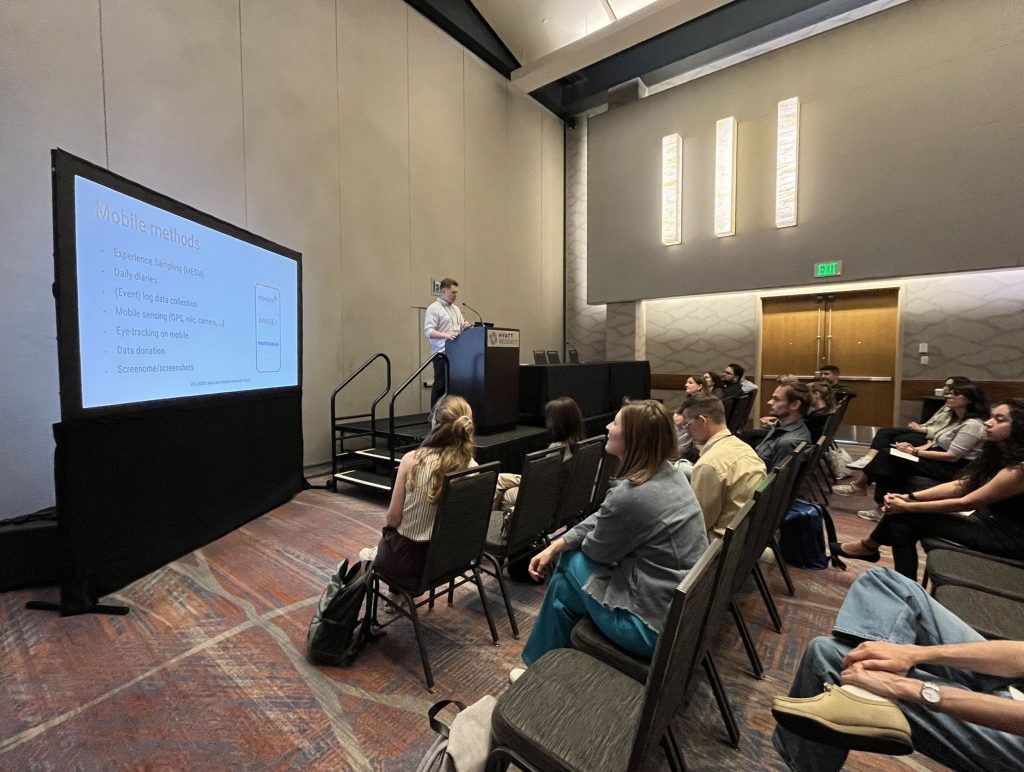
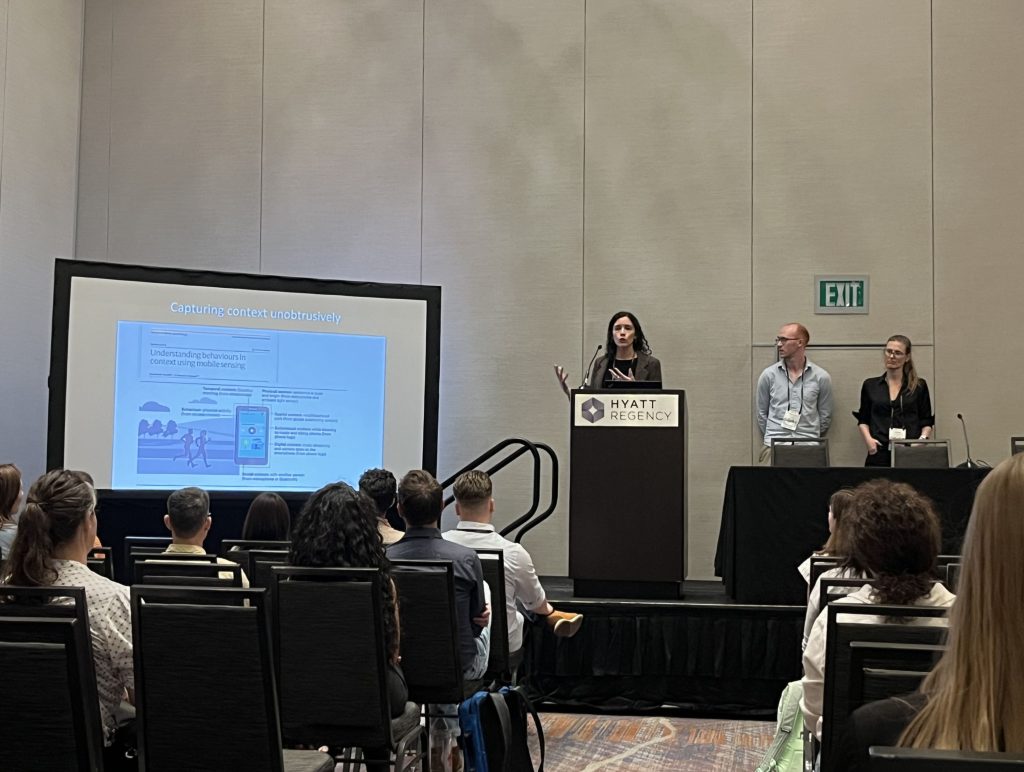
Every year, the International Communication Association (ICA) organizes a conference where communication scholars from around the globe present and discuss their current research. In June 2025, the conference took place in Denver, USA, and many Weizenbaum Institute researchers contributed to it. Among others, Methods Lab member Roland Toth, together with colleague Jakob Ohme, former fellow Joseph Bayer (Ohio State University), and his team members Razieh Pourafshari and Yifei Lu, organized a conference panel called “Miss the Mobile Methods Turn? Reflecting on the Challenges and Potentials of Mobile Communication Science”.

Many social scientists use mobile data collection methods, such as the Ecological Momentary Assessment, data donations, or event log data, but there are hardly any standards or guidelines to work with. The panel addressed this lack of standardization and accessibility of mobile methods within and outside of communication science. In the introduction to the panel, the issue was outlined and attendees were asked to complete a short survey about their expertise regarding different mobile methods, problems they recognized, and whether and to what extent they are willing to contribute to future initiatives to improve the situation.

After the introduction, experienced mobile communication scholars presented examples of empirical research that highlight current practices, challenges, and future perspectives associated with mobile methods. Following these short talks, the presenters, attendees, and organizers discussed possible standards, priorities, and endeavors to strengthen this growing research area, as well as how the community can organize to support the use of mobile methods to the Communication field at-large.

The panel was received well and paved the way for further steps to gradually tackle these issues. The discussion shed light on the wide interdisciplinary use of mobile methods and their relevance, both in and beyond communication science, that goes along with that. It showed that there currently is potential for all panel presenters, attendees, and organizers, but also other communication researchers, to contribute to the advancement of mobile methods across fields, which the Weizenbaum Institute aims to participate in. Accordingly, based on the results of the survey, future initiatives such as white papers, methods reviews, or workshops addressing the current state and standardization of mobile methods will be planned. Stay tuned for these in the future!

Workshop: Social Science and Language Models (April 3–4, 2025)

The Weizenbaum research groups “Digital Economy, Internet Ecosystem, and Internet Policy” (Jan Batzner) and “Data, Algorithmic Systems and Ethics” (Dr. Fatma Elsafoury), supported by Fraunhofer FOKUS and TU Berlin, with contributors Zeerak Talat and Flor Miriam Plaza del Arco, are excited to introduce the workshop “Social Science and Language Models – Methods and theory to responsible research on and with Language Technologies” taking place on April 3–4, 2025 at the Weizenbaum Institute. This hybrid event encourages interdisciplinary collaboration to promote ethically responsible research in the application of natural language technology. As methodology utilizing language models is increasingly applied to a variety of contexts from social science, health-care settings to computer software development, research suggests the growing need to monitor potential biased outcomes of its use. However, the absence of collaborative understanding between researchers of social science and those in Natural Language Processing (NLP), perpetuates discrimination as biases in the conception and measurement of socio-technical systems often go unrecognized.


Therefore we hope to engage a diverse group of researchers involved in the methodology of social or economic fields of discipline to address this prejudice in language technologies. Submissions of abstracts are encouraged to involve aspects of bias in the mitigation and measurement of NLP, as well as its implications in the social sciences.

This event is open for the Qualification program in digitalization research (Module 2; specialization).


For more information, visit our program page. We are looking forward to your participation!

Recap: Second Networking Event for Digitalization Research in Berlin

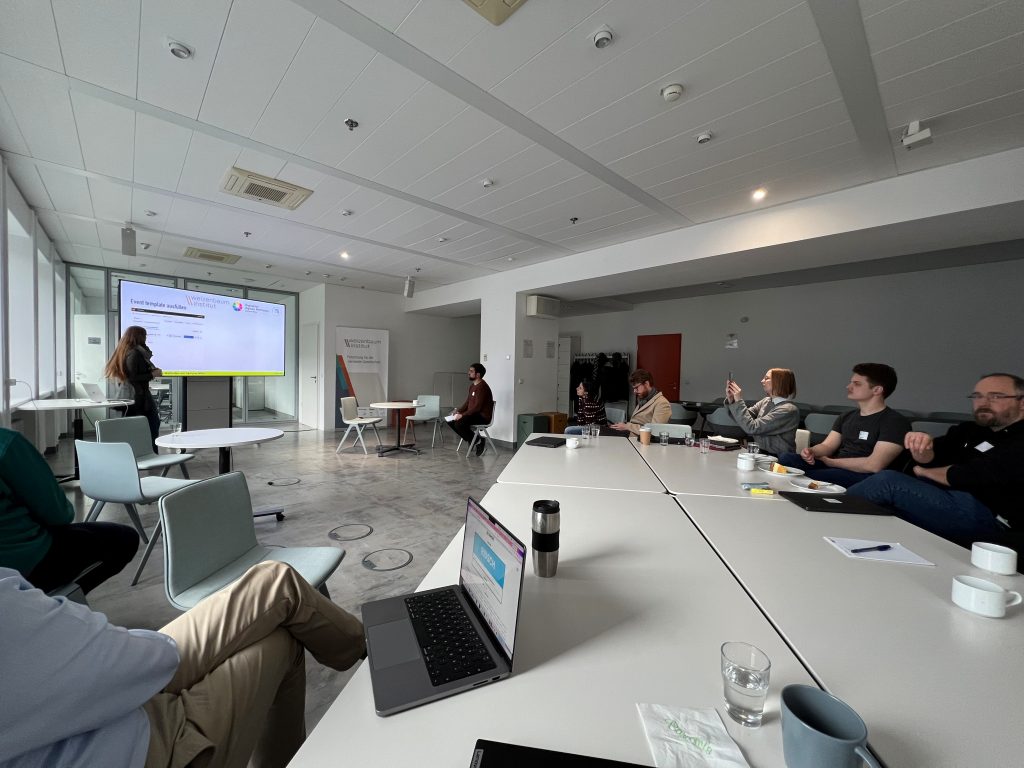
After the first networking event in 2024, the Methods Lab at the Weizenbaum Institute and the Interdisciplinary Center for Digitality and Digital Methods at Humboldt University Berlin (IZ D2MCM) organized a second networking event on January 24, 2025. As with the initial event, members of various institutions, institutionalized teams, and centers actively engaged in digital research within the humanities, social sciences, and cultural studies in the Berlin area participated. While there were some familiar faces, there were some newcomers.

In the first part of the event, participants discuss their experiences with networking strategies in a speed-dating format. Each conversation was documented by a member of the organizing team. Participants were rotated every few minutes to create different pairings. Each conversation was documented by a member of the organizing team. Participants highlighted the importance of networking within their own institutions, attending regularly organized events to formalize informal connections, pooling resources, and implementing cross-institutional research projects.

In the second part of the event, colleagues from IZ D2MCM presented participants with a calendar system they developed. Its purpose is to consolidate events occurring at the network institutions into a single platform, making them accessible to all members. The system was then discussed in two groups. In one group, participants exchanged ideas on the design and admission criteria for events, considering aspects such as content, format, and location. In the other group, participants focused on facilitating the technical implementation, which operates through Git and enables network members to submit event metadata in a structured format.

The Methods Lab would like to thank the IZ D2MCM and all participants for their contributions to this successful event. Stay tuned for the next one!

Workshop: Introduction to Git

Join us in our first workshop of 2025 for an Introduction to Git, held on Thursday, February 6th. This event will be taking place at the Weizenbaum Institute and welcomes Weizenbaum Institute members to participate.

LK Seiling, an associate researcher, IT administrator Sascha Kostadinoski, and student assistant Quentin Bukold will be the primary instructors leading this event. Together they will guide participants through short theoretical segments, introducing fundamental Git commands and version control concepts. In addition to learning the operations of key Gitlab features, this workshop encourages guests to participate in quizzes and incorporates interactive exercises.

For further details, visit our program page. We hope to see you there!

Show and Tell Recap: OpenQDA – A Sustainable and Open Research Software for Collaborative Qualitative Data Analysis

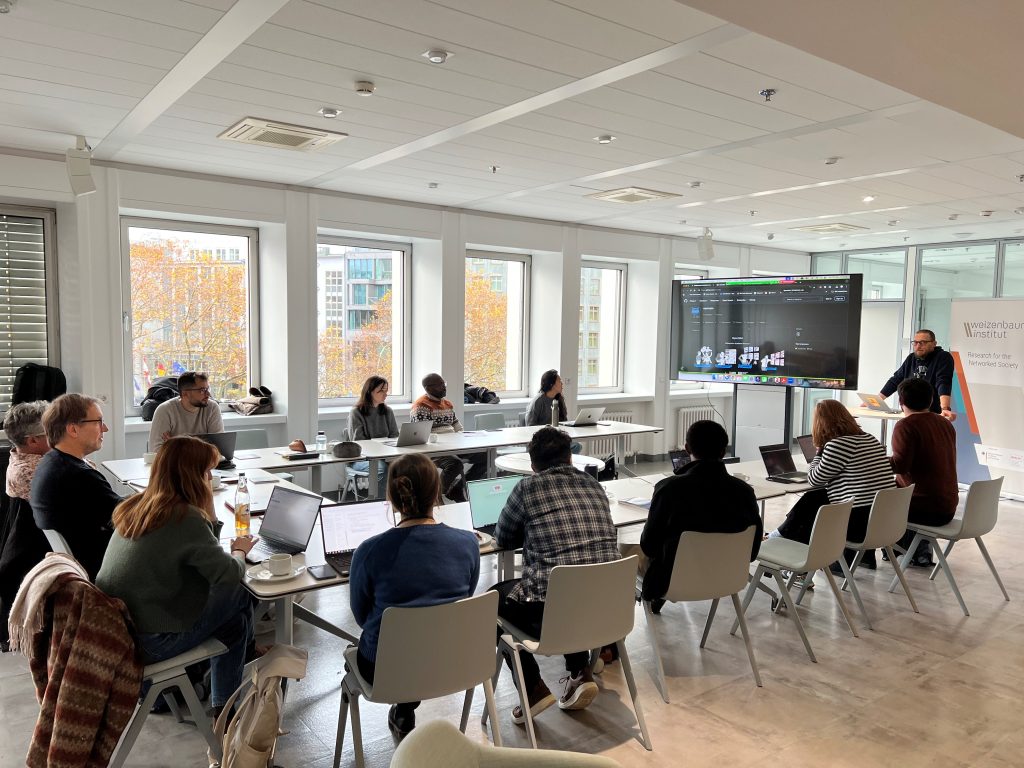
On November 18, 2024, Karsten Wolf and Florian Hohmann from the University of Bremen presented the software OpenQDA at WI. In this Show and Tell, they gave an overview of OpenQDA and its motivations, functions, and limitations.

In the first part of the Show and Tell, Karsten Wolf presented the development and purpose of the software. It is an open-source alternative to the commercial software MaxQDA, which is a popular tool for text annotation (i.e., coding) in qualitative research. The team at the University of Bremen had been working on OpenQDA for quite some time to not only deliver a free and customizable alternative to MaxQDA, but also allow for (simultaneous) collaboration on projects. In addition, OpenQDA has a plug-in framework that will be expanded over time. For example, atrain is already supported and can be used to transcribe audio files to text, and a plug-in that allows for implementing Python scripts is currently in the works. While OpenQDA is still under development and currently in early-access, the first official release is planned for the near future. It runs on servers at the Unversity of Bremen and can be used by anyone for free.

In the second part of the Show and Tell, Florian Hohmann gave a practical introduction to the most recent version of the software. He showed participants how to create an account, set up a new project, and create a team to work on projects collaboratively. Text content can be added manually, from documents, audio files, and soon even remote sources. These texts can then be annotated/coded using separate, color-coded categories, and it is possible to set up sub-categories for further refinement. The results can be exported in CSV format. In addition, users can create a code portrait, which illustrates the distribution of categories across the text, and a word cloud for quick visual analysis.

At the end of the Show and Tell, participants provided feedback and suggestions for future implementation. For example, the automated conversion of scanned documents to plain text using OCR, and functions like counting and automatic coding, were discussed. Some participants were willing to stay and provide further feedback even after the main event ended. Finally, the team from Bremen, the Methods Lab, and the Weizenbaum Institute IT department discussed the installation of OpenQDA on the Institute’s servers in 2025 to provide a local instance to Weizenbaum Institute researchers.

The Methods Lab would like to thank the colleagues from Bremen for their work, and all participants for providing useful feedback!