Workshop Recap: Introduction to Content Management System Open Paper

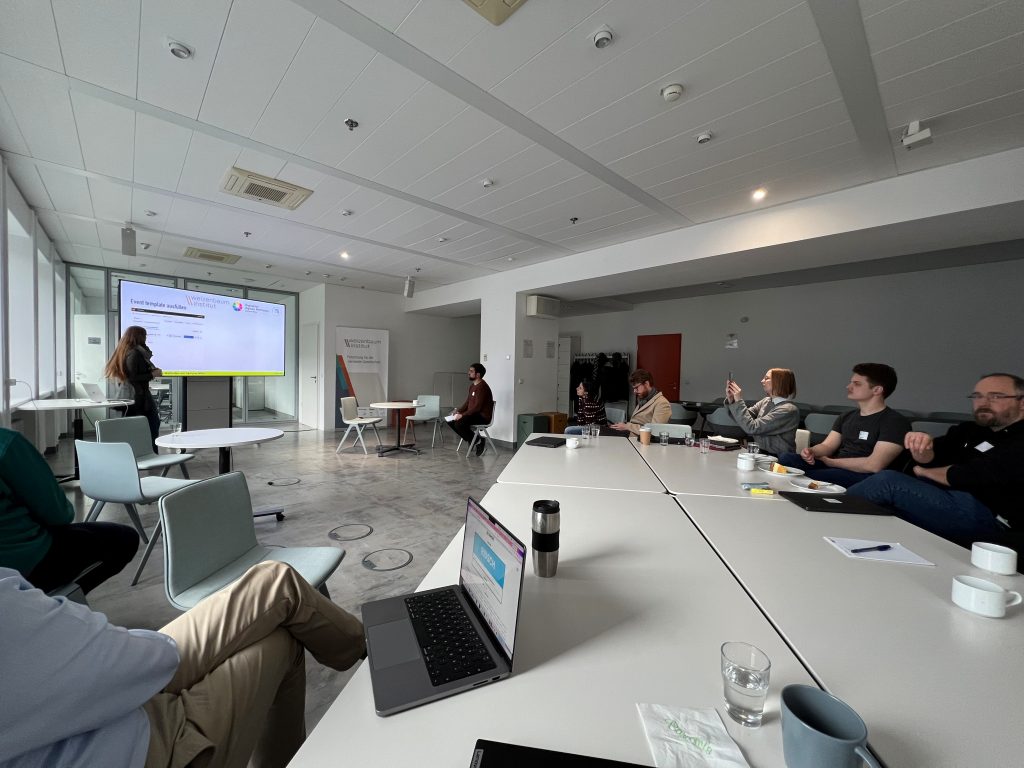
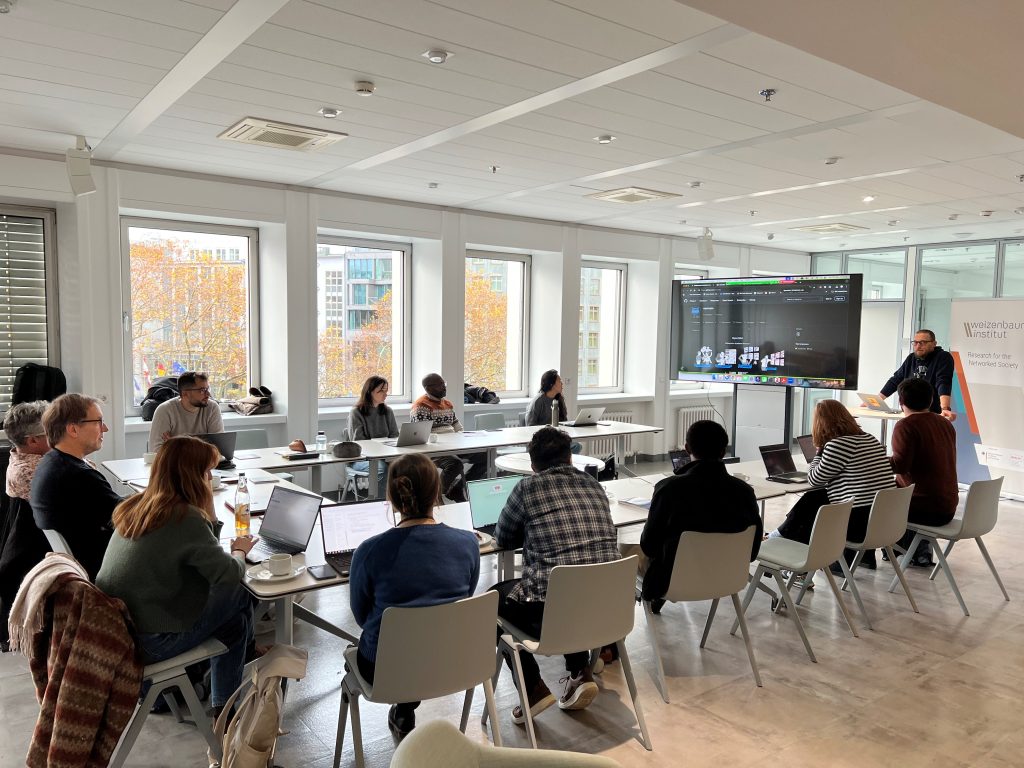
On April 28, 2026, researchers from the WI gathered for an engaging workshop introducing Open Paper – a next-generation content management system designed to break free from the constraints of traditional publishing formats. The session centered on a core idea: knowledge shouldn’t be confined to linear, static documents. Instead, Open Paper enables dynamic, interactive publications that adapt to how readers actually engage with content. By replacing rigid PDFs and blog posts with modular, navigable experiences, the platform empowers authors to create richer, more intuitive reading experiences. The workshop was organized by Merja Mahrt and Esther Görnemann from WI together with the Methods Lab, and Markus Brandenburg and Fabian Hassel from the agency that has developed Open PaperMADEFUL – were invited as speakers.

In the workshop, participants explored how Open Paper transforms static text into living publications. Through a hands-on demo, they discovered features like:

  • Modular content blocks (text, multimedia, citations, sticky notes, animations)
  • Flexible layouts with multi-column arrangements and responsive design
  • Interactive expositions that allow readers to dive deeper into subtopics while maintaining context
  • Self-contained chapters that make content accessible even when read out of order
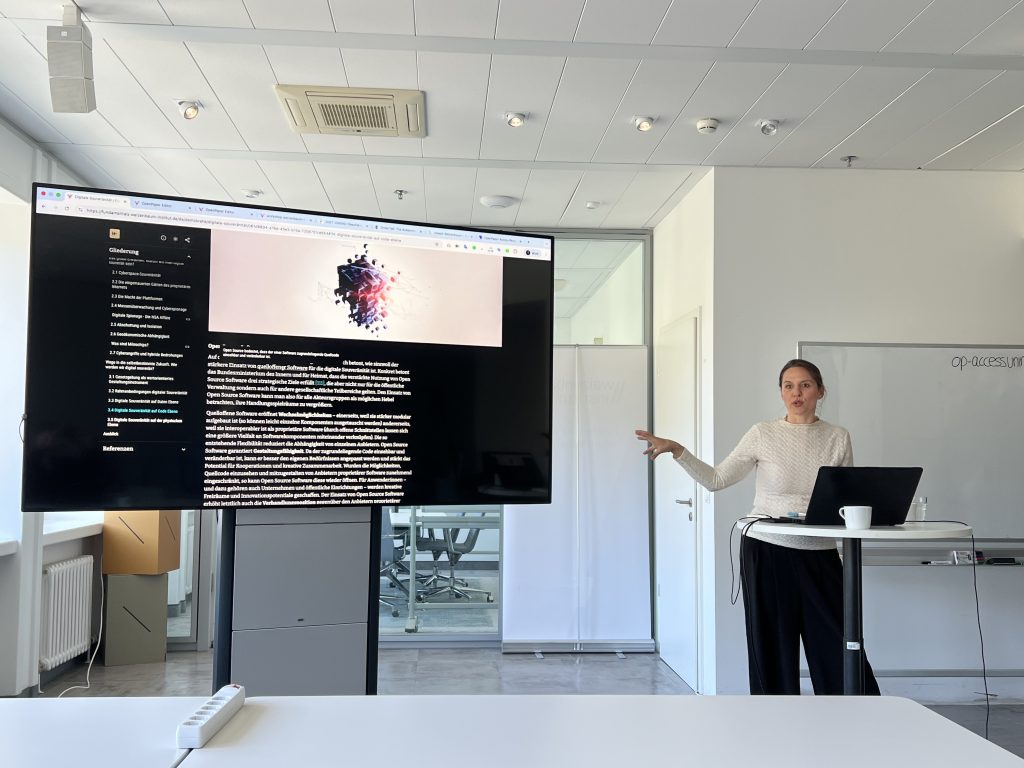
The real impact was seen in an overview over digital sovereignty as part of the Weizenbaum fundamental series – a flagship example of what’s possible. With interactive visuals, side-by-side comparisons, and layered explanations, the publication achieved an average reader engagement of 26 minutes, which is a clear indicator of depth and interest. Even more telling: traffic increasingly comes from AI tools like ChatGPT, signaling that the content is not only readable but reusable and referable in emerging digital workflows.

Beyond design, Open Paper was built on strong ethical and technical foundations: open source, open access, GDPR-compliant, CO₂-neutral hosting, SEO-friendly, and fully accessible. Like the Weizenbaum Institute, other institutions can also deploy a custom instance aligned with their corporate design, ensuring brand consistency and long-term ownership.
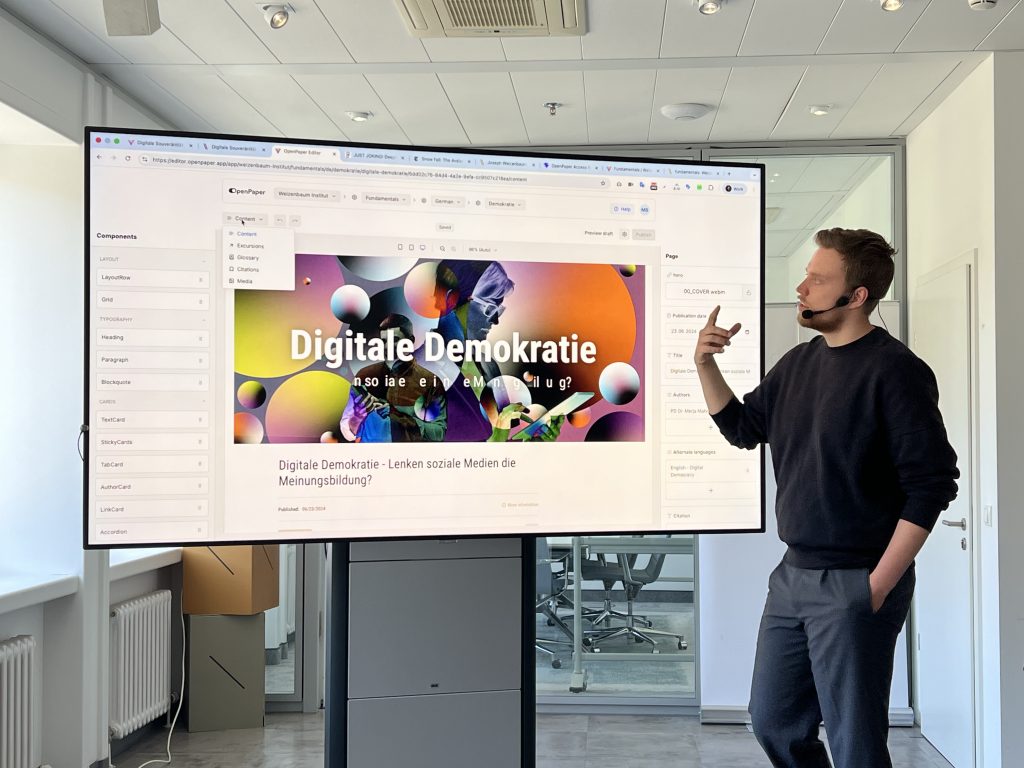
The workshop’s interactive phase let participants discover how to build a page in real time using a three-panel interface:

  • Left: Structure and layout tools (grid, headings, visual elements)
  • Center: Live preview of content and layout
  • Right: Contextual editing options for the selected element

Beyond the workshop itself, the presenters further created a tutorial video made available on the WI’s Open Paper instance.

Rather than offering a one-size-fits-all template, Open Paper encourages authors to think critically about audience, structure, and engagement. It represents a shift in how we think about knowledge sharing: interactive, inclusive, and built for the future.
Meet our Newest Methods Lab Members!

We are delighted to welcome our newest members, Baoning “Bonny” Gong and Miriam Milzner to the Methods Lab. As research associates and doctoral researchers in the group “Dynamics of Digital Mobilization” at the Weizenbaum Institute, they bring methodological expertise and extensive research experience in digital political communication.

Baoning Gong completed her master’s degree in Media and Political Communication at Freie Universität Berlin. In her doctoral research, she examines the mobilization of far right social movements across different social media platforms from a comparative perspective.

Bonny enjoys working with quantitative and qualitative content analysis, that allow for both in depth analysis and the identification of patterns at scale. For her, paying attention to what people say and write is a key starting point to understand politics and society. By joining the methods lab, she is most excited about helping with methods questions and exploring new methods others are using in their research.

A small joy in her office: a steadily growing collection of stuffed animals on her desk.

Miriam Milzner is a doctoral candidate at Freie Universität Berlin, where she also completed her master’s degree in Communication and Media Studies. Her dissertation focuses on coordinated disinformation campaigns and the strategic manipulation of public debates on social media, exploring how digital information ecosystems shape mobilization and information disorder.

She is most enthusiastic about computational methods and about supporting colleagues in developing their methodological skills in the methods lab. She also looks forward to bringing inspiring researchers to the institute to share their expertise. Outside of her research, going through her saved searches on Vinted and Kleinanzeigen is a small ritual that brightens her day.

We are very happy to have Bonny and Miriam join our team and look forward to working with them in the Methods lab. Welcome!

New publication: The quality and quantity of mobile media use

In a world where smartphones are rarely out of reach, the conversation around mobile media use has long centered on one metric: screen time. But what if the real story isn’t about duration, but about how we use these devices?

The Methods Lab is proud to share a new publication in Computers in Human Behavior Reports, authored by Roland Toth, Aurelio Fernández, Javier García-Manglano, and Pedro de la Rosa. Titled Quality and quantity: The role of gratification and situation variety when measuring mobile media use, this study challenges the dominance of screen time and proposes a more meaningful way to understand smartphone engagement. This publication is a result of a cooperation between the Methods Lab and the Institute for Culture and Society at the University of Navarra that was initiated with a research stay in 2023.

Using data from 1,525 Spanish emerging adults across three waves of a national panel study, the researchers suggest that the variety of gratifications (such as staying informed, socializing, organizing, or escaping stress) and the diversity of situations (different combinations of places, activities, and social settings) play an important role when measuring mobile media use more comprehensively. Both were stronger predictors of mobile vigilance (our constant mental and behavioral attention to devices) than the duration spent using them. Situation variety was particularly strongly linked to mobile vigilance. This suggests that the true significance of smartphone use lies not in how long we use it, but in how deeply and broadly it’s woven into daily life.

The findings challenge the idea that screen time alone captures meaningful engagement. Instead, they highlight that smartphones are not just tools for consumption, but dynamic instruments of identity, connection, and routine – especially when used across varied purposes and contexts. This paper calls for a shift in research: measuring not just how much, but to what extent people leverage their devices. By integrating quality dimensions like gratification and situation variety, researchers can gain a richer, more expressive picture of digital behavior.

As mobile media evolve, so must our methods. This work is a step toward a more human-centered understanding of digital life – one that values depth over duration.

Call for Contributions: “Data, Archives, & Tool Demos” at the 2026 DGPuK Annual Conference

The Methods Lab is excited to announce that the “Data, Archive & Tool Demos” special session will return at the 2026 DGPuK Annual Conference in Dortmund. The event will be co-organized by Methods Lab lead Christian Strippel with Johannes Breuer, Silke Fürst, Erik Koenen, Dimitri Prandner, and Christian Schwarzenegger, in collaboration with the GESIS Methods Hub, a community-oriented network for computational tools and resources.

This year’s session is a continuation of the format introduced at the 2024 DGPuK Conference in Erfurt, in a well-received event. The aim moving forward is to keep the discussion going, and potentially establish this format as a regular feature of the annual conference. Full details of the call for 2026 contributions are available here

Researchers are invited to submit 200–300 word abstracts (German or English) by January 19, 2026. Eligible contributions must have not already been presented in the previous DGPuK sessions, are required to be available for scholarly reuse and must not be managed commercially. Contributions may also be resubmitted only if they have changed significantly, and this must be stated explicitly.

Computing Resources for WI

As digital methods advance rapidly, quantitative empirical research requires greater computing power. This includes complex statistical analyses, model training, and operating generative AI models. The necessary hardware is expensive and challenging to maintain, particularly at the institutional level (e.g., due to high temperatures in HPC clusters). Since not every institution can (or should) set up such hardware independently, resources are shared through collaborations with other institutions.

Against this background, the Weizenbaum Institute is exploring options to enable both low-demand computing tasks (e.g., a virtual machine for background web scraping) and high-demand tasks (e.g., running current large language models) for its researchers. Recently, the following options have been identified (some of which are only available to Berlin scientists):

Datenzentrum Berlin (Berlin University Alliance)

  • Not established yet, but planned

de.NBI Cloud (Deutsches Kompetenzzentrum Clouddienste)

  • free to use with scientific project proposal: https://datenkompetenz.cloud/
  • “Self service” virtual machines
  • currently trying to support digital humanities and social science

FUB-IT (Freie Universität Berlin)

  • Free to use (FU account required; guest accounts are available)
  • High-performance cluster (HPC)
  • Software partially included, some can be requested
  • GPUs are available

Gauss Computing Center

  • Up to very large scale projects (both HPC and AI) on proposal in different calls: https://www.gauss-centre.eu/for-users/hpc-access
  • Several equipment up to supercomputers SuperMUC I and II usable

Gesellschaft für wissenschaftliche Datenverarbeitung mbH Göttingen (GWDG):

Galaxy Server

  • Community-driven web-based analysis platform for life science research
  • Free to use batch system with many tools usable by browser, huge data sizes are no problem
  • Although coming from Bioinformatics, there are many tools for text processing, audio and image analyses, as well as statistics can be put together in pipelines.

HPI (Hasso Plattner Institut) UP Potsdam

Zentraleinrichtung Campusmanagement (TU Berlin)

  • Free to use (TUB account required)
  • High-performance cluster
  • Software partially included, some can be requested

Zuse Institute Berlin (ZIB)

  • Support from the state of Berlin, linked to BUA, e.g. BI-FOLD also calculates there
  • Provides tailor-made solutions, e.g. can make own instances of HAWKI, LibreChat or similar available with WI licenses
  • Resources available only by collaboration.

Apart from these external offers, the Weizenbaum Institute itself already provides some services to its researchers:

  • Virtual machines
  • Jupyterhub
  • Gitlab

Researchers who are interested in using any of these services can follow the instructions on the according websites for external services. For internal services, instructions are provided in the internal WI Wiki.

Disclaimer: This list will be updated regularly. If you know of any other resources that are available to members of the Weizenbaum Institute, please let us know.

Mobile methods panel at ICA 2025

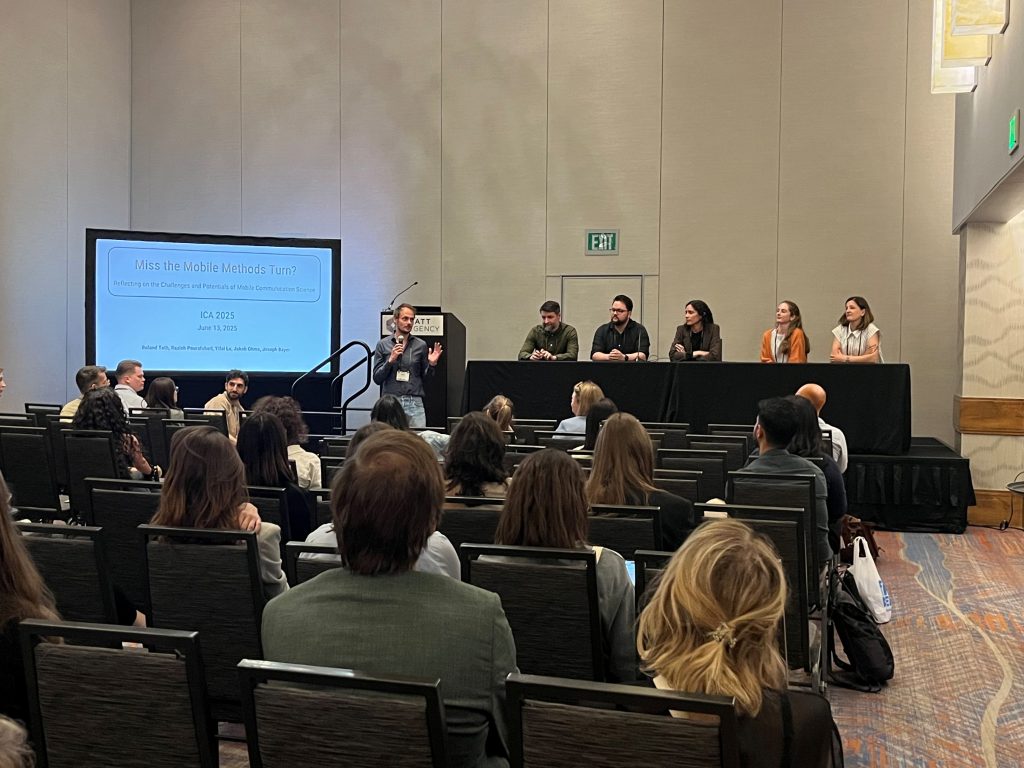
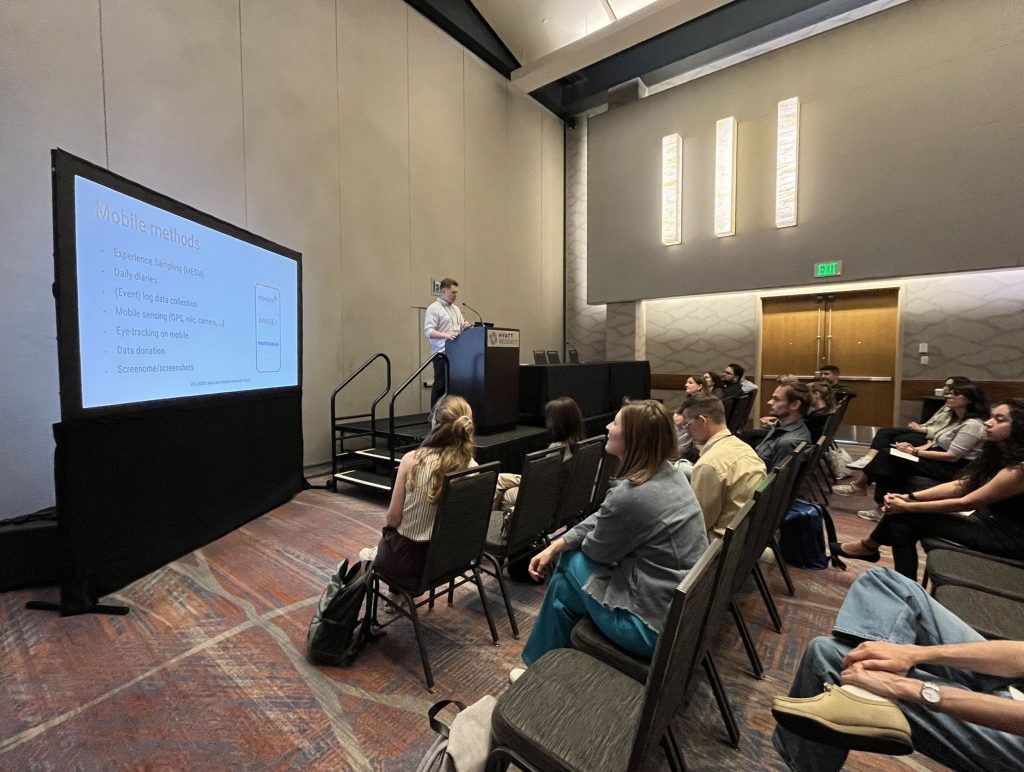
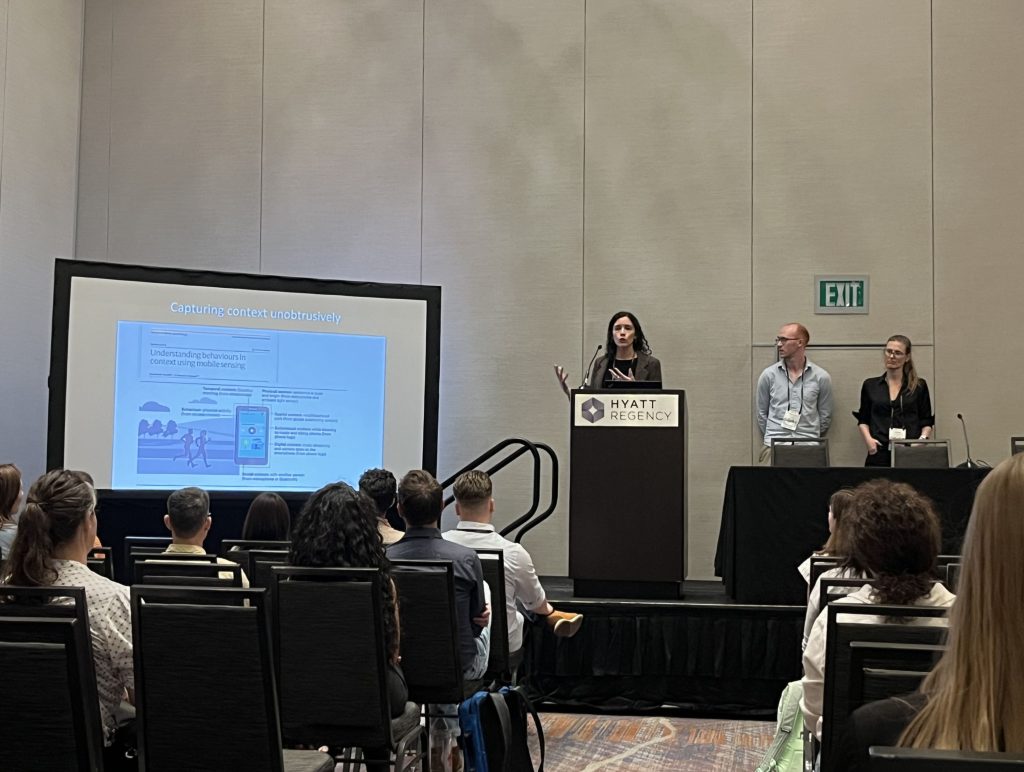
Every year, the International Communication Association (ICA) organizes a conference where communication scholars from around the globe present and discuss their current research. In June 2025, the conference took place in Denver, USA, and many Weizenbaum Institute researchers contributed to it. Among others, Methods Lab member Roland Toth, together with colleague Jakob Ohme, former fellow Joseph Bayer (Ohio State University), and his team members Razieh Pourafshari and Yifei Lu, organized a conference panel called “Miss the Mobile Methods Turn? Reflecting on the Challenges and Potentials of Mobile Communication Science”.

Many social scientists use mobile data collection methods, such as the Ecological Momentary Assessment, data donations, or event log data, but there are hardly any standards or guidelines to work with. The panel addressed this lack of standardization and accessibility of mobile methods within and outside of communication science. In the introduction to the panel, the issue was outlined and attendees were asked to complete a short survey about their expertise regarding different mobile methods, problems they recognized, and whether and to what extent they are willing to contribute to future initiatives to improve the situation.

After the introduction, experienced mobile communication scholars presented examples of empirical research that highlight current practices, challenges, and future perspectives associated with mobile methods. Following these short talks, the presenters, attendees, and organizers discussed possible standards, priorities, and endeavors to strengthen this growing research area, as well as how the community can organize to support the use of mobile methods to the Communication field at-large.

The panel was received well and paved the way for further steps to gradually tackle these issues. The discussion shed light on the wide interdisciplinary use of mobile methods and their relevance, both in and beyond communication science, that goes along with that. It showed that there currently is potential for all panel presenters, attendees, and organizers, but also other communication researchers, to contribute to the advancement of mobile methods across fields, which the Weizenbaum Institute aims to participate in. Accordingly, based on the results of the survey, future initiatives such as white papers, methods reviews, or workshops addressing the current state and standardization of mobile methods will be planned. Stay tuned for these in the future!

DeZIM Summer School 2025

For those interested in strengthening their skills in social research methods, we’re pleased to announce that registration is now open for the DeZIM Summer School 2025 (Deutsches Zentrum für Integrations und Migrationsforschung).

Running from August 12 to 14, the program is free and open to all, offering workshops in both qualitative and quantitative methods. Courses are designed for participants ranging from beginners to advanced, and all are welcome to join multiple sessions. However, space is limited, so we encourage early registration by completing this survey before the deadline on June 30, 2025.

As part of the ongoing collaboration between DeZIM and the Weizenbaum Institute, both institutions share access to each other’s workshops. Through this partnership, we aim to create more opportunities for researchers to develop and strengthen their methodological expertise.

To learn more about additional upcoming workshops, check out our Methods Ticker!

Recap: Second Networking Event for Digitalization Research in Berlin

After the first networking event in 2024, the Methods Lab at the Weizenbaum Institute and the Interdisciplinary Center for Digitality and Digital Methods at Humboldt University Berlin (IZ D2MCM) organized a second networking event on January 24, 2025. As with the initial event, members of various institutions, institutionalized teams, and centers actively engaged in digital research within the humanities, social sciences, and cultural studies in the Berlin area participated. While there were some familiar faces, there were some newcomers.

In the first part of the event, participants discuss their experiences with networking strategies in a speed-dating format. Each conversation was documented by a member of the organizing team. Participants were rotated every few minutes to create different pairings. Each conversation was documented by a member of the organizing team. Participants highlighted the importance of networking within their own institutions, attending regularly organized events to formalize informal connections, pooling resources, and implementing cross-institutional research projects.

In the second part of the event, colleagues from IZ D2MCM presented participants with a calendar system they developed. Its purpose is to consolidate events occurring at the network institutions into a single platform, making them accessible to all members. The system was then discussed in two groups. In one group, participants exchanged ideas on the design and admission criteria for events, considering aspects such as content, format, and location. In the other group, participants focused on facilitating the technical implementation, which operates through Git and enables network members to submit event metadata in a structured format.

The Methods Lab would like to thank the IZ D2MCM and all participants for their contributions to this successful event. Stay tuned for the next one!

Show and Tell Recap: OpenQDA – A Sustainable and Open Research Software for Collaborative Qualitative Data Analysis

On November 18, 2024, Karsten Wolf and Florian Hohmann from the University of Bremen presented the software OpenQDA at WI. In this Show and Tell, they gave an overview of OpenQDA and its motivations, functions, and limitations.

In the first part of the Show and Tell, Karsten Wolf presented the development and purpose of the software. It is an open-source alternative to the commercial software MaxQDA, which is a popular tool for text annotation (i.e., coding) in qualitative research. The team at the University of Bremen had been working on OpenQDA for quite some time to not only deliver a free and customizable alternative to MaxQDA, but also allow for (simultaneous) collaboration on projects. In addition, OpenQDA has a plug-in framework that will be expanded over time. For example, atrain is already supported and can be used to transcribe audio files to text, and a plug-in that allows for implementing Python scripts is currently in the works. While OpenQDA is still under development and currently in early-access, the first official release is planned for the near future. It runs on servers at the Unversity of Bremen and can be used by anyone for free.

In the second part of the Show and Tell, Florian Hohmann gave a practical introduction to the most recent version of the software. He showed participants how to create an account, set up a new project, and create a team to work on projects collaboratively. Text content can be added manually, from documents, audio files, and soon even remote sources. These texts can then be annotated/coded using separate, color-coded categories, and it is possible to set up sub-categories for further refinement. The results can be exported in CSV format. In addition, users can create a code portrait, which illustrates the distribution of categories across the text, and a word cloud for quick visual analysis.

At the end of the Show and Tell, participants provided feedback and suggestions for future implementation. For example, the automated conversion of scanned documents to plain text using OCR, and functions like counting and automatic coding, were discussed. Some participants were willing to stay and provide further feedback even after the main event ended. Finally, the team from Bremen, the Methods Lab, and the Weizenbaum Institute IT department discussed the installation of OpenQDA on the Institute’s servers in 2025 to provide a local instance to Weizenbaum Institute researchers.

The Methods Lab would like to thank the colleagues from Bremen for their work, and all participants for providing useful feedback!

Short Project: Ethics of Data Work

AI systems rely heavily on workers who face precarious conditions. Data work, clickwork, and crowdwork—essential for validating algorithms and creating datasets to train and refine AI systems—are frequently outsourced by commercial entities and academic institutions. Despite the vast and growing workforce of 435 million data workers enabling machine learning, their working conditions remain largely unaddressed, resulting in exploitative practices. Academic clients, in particular, lack clear guidance on how to outsource data work ethically and responsibly.

To address this issue, Christian Strippel from the Methods Lab is part of the short project “Ethics of Data Work” together with Milagros Miceli and Tianling Yang from the research group “Data, Algorithmic Systems and Ethics“, Bianca Herlo and Corinna Canali from the research “Design, Diversity and New Commons“, and Alexandra Keiner from the research group “Norm Setting and Decision Processes“. Together they aim to create equitable working systems grounded in the real knowledge and experience of data workers. The project will gather valuable insights about the challenges and needs data workers face, with the objective of developing ethical guidelines for researchers to ensure responsible and ethical treatment in the future.